
‘It’s the most talked-about game on TV’…
It was only a matter of time. The BBC’s most addictive reality juggernaut has always thrived on paranoia, theatre and a certain gothic campness, and now The Traitors has gone celebrity.
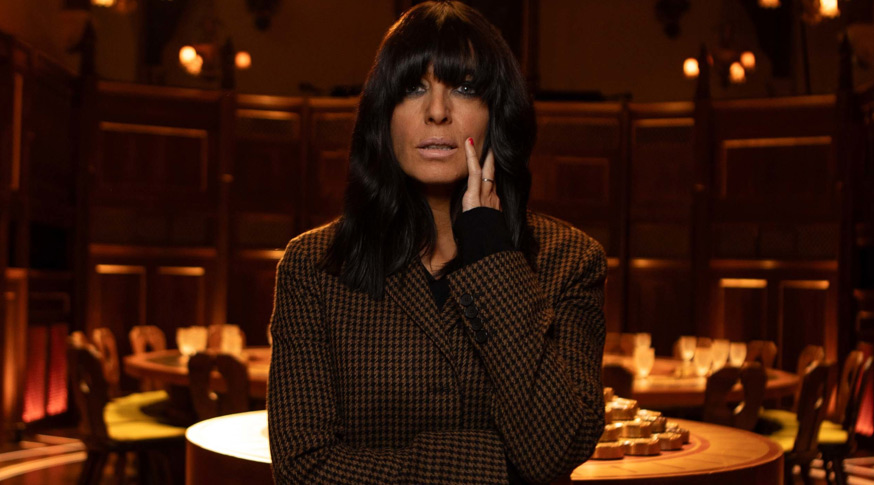
Later this autumn Claudia Winkleman will once again don the fringe, the cape and the conspiratorial whisper as she ushers a new cohort of contestants into the turreted Highland castle. The difference? This time the players are household names, risking reputation and pride for up to £100,000 in prize money – all for their chosen charities.
The mechanics are unchanged: the Faithful must root out the Traitors before they are “murdered”; the Traitors must survive long enough to keep the pot for themselves. The format has won a Bafta, conquered the US, and entered pub-quiz folklore. But celebrity versions of reality formats bring their own complications. How ruthless can you be with Stephen Fry across the round table? Could you honestly vote out Celia Imrie, Britain’s national treasure? And does a comic like Nick Mohammed dare risk being too funny, too visible, in a game where attention is a liability?
Celia Imrie: the art of seeming nice
“I think people think I’m nice – which could be very useful,” Celia Imrie tells us, with the faintest glint of mischief. The Calendar Girls and Best Exotic Marigold Hotel star is one of the more unlikely recruits for a reality format but insists that The Traitors is “as different to anything else I have ever done.”
She knows the risks. “Being yourself is oddly quite a difficult thing,” she says, likening it to being on a chat show without the comfort of a character to hide behind. A self-described “naughty streak” may surface, though the Missions leave her uneasy: “Upside down on one of those wheels? I really couldn’t. I wouldn’t want to be a bad sport, but I really wouldn’t want to do that.”
Still, Imrie relishes the chance to scrutinise her fellow players: “Yes, I can spot a liar – but I need time. I want to give myself time to scrutinise their body language.”
Stephen Fry: reason over instinct
The most eyebrow-raising signing is surely Stephen Fry, the polymath broadcaster who has hosted QI, written novels, and delivered more erudite lectures than most academics. So why this?
“It was probably because I’ve done so many things in my life that almost anything I get asked to do, I’ve done something like it. With this, I’ve never done anything like it before.”

Fry is clear: he wants to be a Faithful. “Being a Traitor is really quite stressful. You have to plot against people, you have to be mean. Really annoying.”
As for spotting lies, Fry is with the sceptics: “The idea that you can be good at reading people is absolute nonsense. Woo woo. You just can’t do it. Actors, police interrogators – no one. People think they can, but empiricism proves it’s rubbish.”
If he has an advantage, it is his rationalist streak: “The only thing you can go by is reason – when someone makes a mistake, or when their choices at the Round Table don’t make sense. Instinct is no good.”
Nick Mohammed: resisting the giggles
Comedy fans will be curious about Nick Mohammed’s presence – will Ted Lasso’s Nate the Great emerge, or his alter ego Mr. Swallow? “Sadly, I think Nick Mohammed was booked rather than Mr. Swallow,” he laughs. “But I’m not saying I won’t slip into him at some point.”
Like Fry, he’s frank about his own weaknesses. “My problem is I do find things very funny… my biggest worry is the moment when the blindfolds are taken off. Irrespective of whether I’m a Traitor or a Faithful, I’ll struggle not to smile.”

Mohammed has no grand strategy: “At first I’ll just try to be easy breezy. Later you can start thinking about strategy – but it all depends on whether you’re made a Traitor or a Faithful. If you’re a Faithful, you’re constantly worrying if you’ll be murdered. If you’re a Traitor, at least you have some control.”
He’s already dreaming of the show: “One dream I had was that I had to do the whole thing in an American accent!”
What The Celebrity Traitors promises is not merely another run of Claudia Winkleman’s gothic parlour game but a collision of personas: the national treasure, the public intellectual, the comic who can’t keep a straight face. In theory, these are people trained in artifice – actors, comedians, performers – yet the show’s lure has always been that artifice cracks under pressure.
The biggest question is whether celebrity changes the balance. Can audiences really believe Stephen Fry as a backstabber? Will Imrie’s warmth or Mohammed’s awkward giggle be camouflage or liability? And in a cultural moment where politicians themselves seem constantly accused of plotting and betrayal, The Traitors plays out like a satire that writes itself.
The castle doors open on Wednesday 8 October at 9pm on BBC One and iPlayer, with episodes on Wednesdays and Thursdays. However it plays out, the Fringe will fall, the blindfolds will lift, and another national obsession will begin.