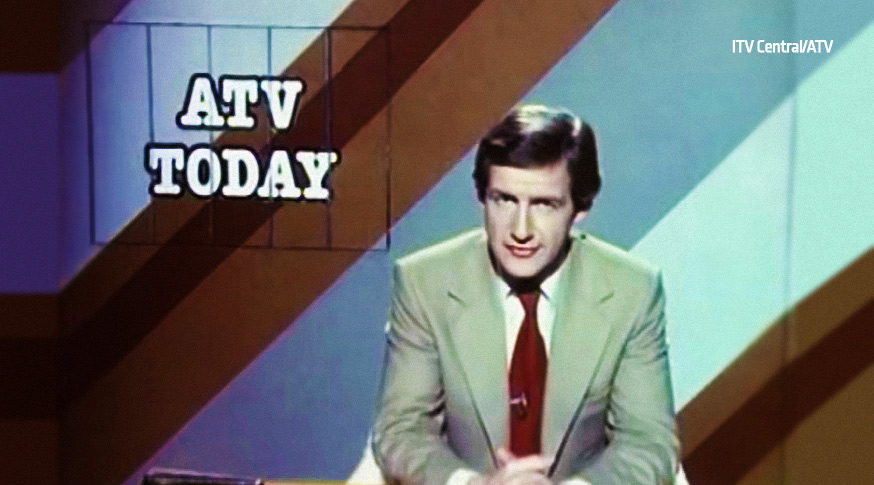
Independent Television came to the region in 1956
When Independent Television arrived in Britain in 1955, the Midlands quickly became one of its most important proving grounds.
Across seven decades, the region has been home to ambition, reinvention and some of ITV’s most influential programmes. From the flamboyant populism of ATV to the confident, regionally rooted powerhouse of Central, the story of ITV in the Midlands mirrors the story of commercial television itself.

ATV: Populism, Prestige and a Midlands Power Base
ATV was there at the very beginning. Following the launch of ATV London as one of ITV’s founding stations in September 1955, the company’s Midlands service went on air in February 1956, giving Associated Television a second, strategically vital stronghold.
Where some early ITV companies sought to “out-BBC the BBC”, ATV was unapologetically populist.
Under Lew Grade’s leadership, it became the contractor most willing to spend big on spectacle and entertainment. Variety shows, light entertainment and star vehicles defined its public image, and it was this flair that fixed ATV in the national imagination.

Yet there was another side to the company. Through Grade’s linked company, ITC, ATV was at the forefront of exporting British television around the world. Glossy filmed dramas such as The Saint, Danger Man and The Prisoner sold internationally, helping to establish ITV drama as a global brand.
ATV also produced high-end drama, opera, arts programming, cultural series and serious documentaries — though these were rarely what the company was remembered for.
In the midlands a home-grown soap opera – the first and only ‘true’ soap the UK has ever produced Crossroads was devised by Hazel Adair and Peter Ling and produced by Reg Watson who went back to his native Australia in the 1970s and gave the world several other soaps including Neighbours.
The 1968 franchise round transformed ATV’s fortunes. Losing its London weekday franchise to the newly created London Weekend Television was a blow, but it came with a prize of far greater long-term value: exclusive control of the Midlands seven days a week.

The company invested heavily in the region, opening the vast, purpose-built ATV Centre in Birmingham, one of Europe’s most advanced colour television complexes. The Midlands now housed one of ITV’s true powerhouses.
Shows that came from the centre included game show The Golden Shot and later episodes of The Power Game drama were also produced in Birmingham.
Despite this, questions about ATV’s regional commitment never quite went away. Its principal production base remained at Elstree in Hertfordshire, well outside its franchise area. Critics accused the company of being too London-focused, with insufficient investment in local programmes and regional identity.
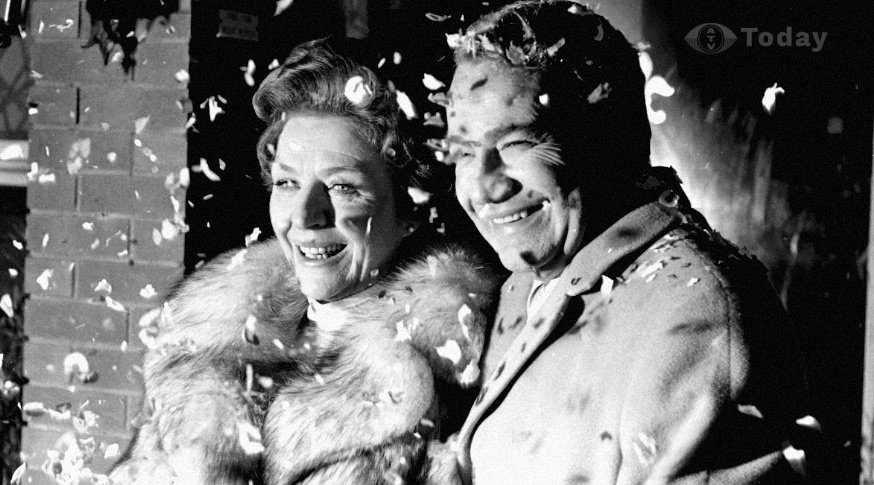
By the late 1970s, the Independent Broadcasting Authority had lost patience. Renewal of the Midlands licence would be conditional on a decisive shift: ATV would have to root itself firmly in the region it served. The result was not just reform, but reinvention.
ATV’s final closedown came just after midnight on 1 January 1982. Long-serving announcer Shaw Taylor marked the end of the company, before duty announcer Mike Prince delivered the final goodbye. As the National Anthem played, ATV passed into history. A few hours later, a new name took to the air: Central Independent Television.
Central: The Midlands Finds Its Voice
From its first day on air, Central carried a dual responsibility. It had to prove its regional credentials to viewers and regulators alike, while also matching — and beating — the network contributions of ITV’s strongest companies: Granada, Thames and LWT.

Early challenges were real. Industrial disputes delayed the launch of a dedicated East Midlands service until late 1983. But once established, Central moved quickly to define itself.
Birmingham remained the heart of West Midlands broadcasting, while the purpose-built Lenton Lane complex in Nottingham — officially opened by the Duke of Edinburgh in 1984 — became one of the most advanced television centres in the country.
Together, the two sites gave Central production muscle on a scale the Midlands had never previously enjoyed.
Crucially, Central took regional news seriously. Central News West and Central News East were fully resourced, editorially distinct services with their own presenters and identities. Later in the decade, Central went further still, pioneering a third sub-region — Central South — serving Oxfordshire and surrounding areas. For viewers who had long felt overlooked, the region was finally being reflected back to itself.
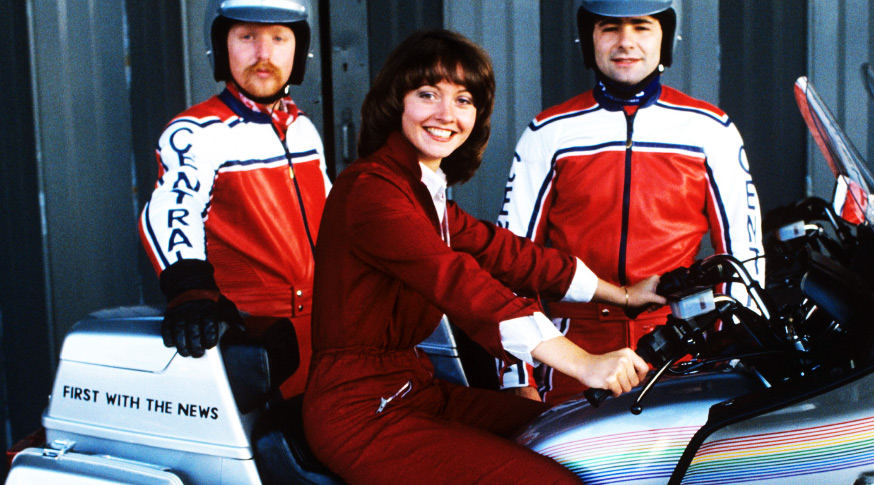
Network Hits and National Influence
If Central proved itself locally, it excelled nationally. Its output in the 1980s and 1990s helped define the tone of modern ITV.
Comedy was one of its strongest suits. Spitting Image became a cultural phenomenon, its grotesque latex puppets savaging politicians, royals and celebrities with unprecedented ferocity.
Broadcast on Sunday nights, it redefined television satire and regularly pulled audiences of millions. Alongside it, game shows such as Bullseye, Blockbusters and Family Fortunes became household staples, their catchphrases woven into everyday life.

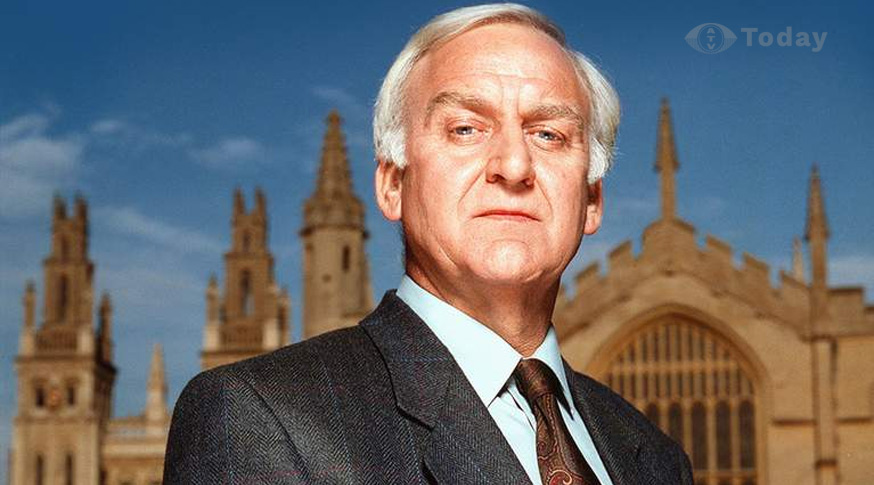
Drama was equally central to Central’s identity. Through its subsidiary Zenith Productions, the company brought Inspector Morse to ITV, turning Colin Dexter’s cerebral Oxford detective into one of British television’s most enduring characters. Other dramas ranged from the Midlands-set Boon to ambitious international co-productions such as Legacy of Civilization.
Current affairs programming was marked by confidence and confrontation. The Cook Report became one of the most influential investigative strands of its era, while Central Weekend mixed politics, entertainment and audience participation in a way that felt genuinely new — and unmistakably Midlands.
Central was no stranger to controversy. Ken Loach’s A Question of Leadership, examining trade union politics, was pulled from transmission amid accusations of political bias. The decision ignited a national debate about censorship, balance and broadcaster responsibility — a debate that still echoes today.
Thinking Beyond the Midlands
Central’s ambitions were never purely domestic. Through Central Television Enterprises, the company established international bureaux in New York, Hamburg and Sydney, selling programmes to more than 80 countries worldwide. Its success was recognised with two Queen’s Awards for Export, in 1987 and 1989.
Innovation also came in unexpected forms. In 1986, long before round-the-clock broadcasting became standard, Central launched Jobfinder, an overnight service listing employment opportunities. Simple in concept but hugely effective, it ran for 17 years, won industry awards and helped thousands of viewers find work — a quietly radical example of public service commercial television.
Children’s programming formed another part of the legacy. Central acquired the FilmFair library and invested in Zodiac Entertainment, helping animated series reach international audiences. Domestically, it played a key coordinating role in Children’s ITV, becoming a familiar and trusted presence for younger viewers.

The End of an Era
Success did not insulate Central from the wider consolidation of ITV. Ownership passed through several hands in the 1980s before Carlton Communications took full control in 1994.
What followed was rationalisation. Nottingham’s role was reduced, Birmingham’s studios were scaled back, and the proud Central identity was gradually submerged beneath the Carlton brand.
The famous ‘Cake’ logo, which had symbolised Central’s confidence throughout the 1990s, eventually disappeared. In 2004, Carlton merged with Granada to create ITV plc — the long-discussed ‘one ITV’.
By 2006, the Central name had vanished from the screen entirely, surviving only in the regional news title: ITV News Central.

A Midlands Legacy
Today, ITV in the Midlands is focused primarily on regional news. But the legacy of ATV and Central looms large.
For decades, the region was a genuine engine room of British television — a place where entertainment dazzled, satire challenged power, drama travelled the world and local voices were finally heard.
As Independent Television marks 70 years in the Midlands, the story of ATV and Central stands as a reminder of what commercial public service broadcasting once achieved: bold, popular, sometimes controversial — and unmistakably of its place.