
Timothy Douglas, Head of Policy and Campaigns, Propertymark has been pondering the issue
For years, the debate around affordable housing has been dominated by a deceptively simple idea: build more homes and the problem of homeownership will take care of itself. But according to Propertymark, the professional body representing estate and letting agents across the UK, the reality facing first-time buyers is far more complex — and far more stubborn.
Drawing on frontline experience from its member agents and evidence submitted to the House of Commons Housing, Communities and Local Government Committee earlier this year, Propertymark argues that the challenge is not just about supply, but about suitability, affordability and access.
Put bluntly, the homes being built are too often not the homes first-time buyers need, not where they need them, and not at prices they can realistically afford.

In many parts of the country, housing supply has recovered from the acute shortages seen during and immediately after the pandemic. Competition has eased, viewing numbers have stabilised and buyers are no longer being forced into snap decisions.
Yet despite these improvements, many first-time buyers remain locked out of the market.
The reason, Propertymark says, is that much of the available stock simply doesn’t work for them. Smaller houses, entry-level flats, maisonettes and well-located starter homes — close to transport links, employment centres and essential services — remain in persistently short supply.
Instead, new listings are often skewed towards larger, higher-value properties or new-build homes carrying premium prices. Even before interest rates, service charges and running costs are factored in, affordability is stretched. More homes, without the right mix, does little to open the door to ownership.
Another major barrier identified in Propertymark’s parliamentary evidence is the growing rigidity of the housing chain.

Traditionally, downsizers would free up smaller, more affordable homes for first-time buyers. Increasingly, that movement is not happening. One of the main reasons is the cost of moving.
Property taxes — including Stamp Duty Land Tax in England and Northern Ireland, Land and Buildings Transaction Tax in Scotland and Land Transaction Tax in Wales — act as a significant deterrent at every stage of the market. For older homeowners, they discourage downsizing. For first-time buyers, they add to an already daunting list of upfront costs.
The result is reduced mobility, slower market churn and fewer opportunities for those trying to take their first step onto the housing ladder.
“This is not a demand problem,” Propertymark says. “First-time buyers are motivated, mortgage-ready and actively searching.” Instead, it is a flow problem — one that cannot be solved by headline housebuilding targets alone.
Affordability is often reduced to house prices alone, but in reality it is shaped by a series of compounding barriers. Deposit requirements have risen sharply alongside prices, putting ownership out of reach even for buyers with stable incomes.

Upfront costs — including property taxes, legal fees, surveys and moving expenses — add thousands of pounds more. Propertymark argues that property taxation in particular needs urgent review, warning that it distorts behaviour, reduces mobility and can encourage speculation rather than sustainable homeownership.
When people cannot afford to move, effective supply shrinks — even if homes technically exist.
New-build homes are frequently presented as the solution for first-time buyers, and Propertymark accepts they have an important role to play. However, member agents consistently report a mismatch between what is delivered and what buyers can realistically afford.
Pricing often assumes dual incomes, long mortgage terms and minimal financial resilience. Incentives may help at the margins, but they rarely transform affordability. Location is also a recurring issue, with developments driven more by land availability than access to jobs, transport or existing communities.
As a result, many first-time buyers explore new-build options, only to return to the second-hand market — where supply is already tight.
One of the clearest messages from Propertymark’s evidence to MPs is that housing affordability is intensely local. National averages mask stark regional differences.
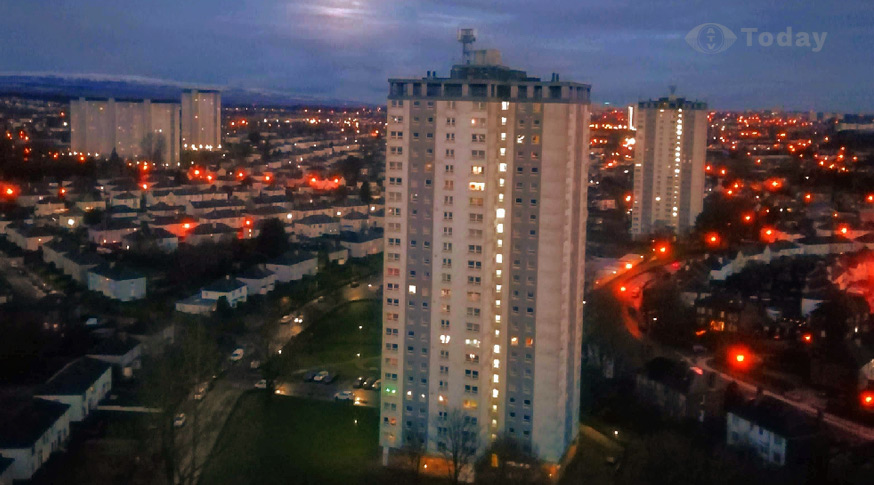
In commuter belts, demand for entry-level homes far outstrips supply. In rural and coastal areas, lower prices are offset by limited employment opportunities. In city centres, leasehold complexity and building safety concerns have reduced the number of mortgageable flats available to first-time buyers.
A one-size-fits-all approach to housing delivery, taxation and regulation, Propertymark argues, fails to reflect how people actually experience the market.
Alongside supply-side reform, Propertymark has called for better consumer support, including the creation of a First-Time Buyer Decision Tool.
Proposed in its submission to the Housing Committee, the tool would bring together clear information on deposits, mortgage affordability, property taxes, available support schemes and the likely costs of professional services such as conveyancing and surveys. The aim is to help buyers plan realistically and avoid unexpected financial shocks.
In an increasingly complex market, Propertymark says, better information is not a luxury but a necessity.
Affordability is also shaped by how homes are bought and sold. Wider reform of the buying and selling process — reducing duplication, streamlining procedures and improving certainty — could cut costs, reduce delays and lower fall-through rates.
First-time buyers are not a niche group. They underpin the entire housing market. When they can move, chains form, confidence improves and transactions flow. When they cannot, the whole system slows.
With elections in Scotland and Wales approaching in May, and pressure mounting on Westminster to clarify its housing reform agenda, Propertymark says policymakers have a clear opportunity — and responsibility — to rethink how homeownership is delivered.
If access to homeownership is to be restored, the focus must shift from how many homes are built to whether the housing system itself is designed to work for first-time buyers — and for the market as a whole.