
The Ojibwe singer-songwriter brings together more than 30 Indigenous and ally artists for a celebration of strength, unity and reconciliation
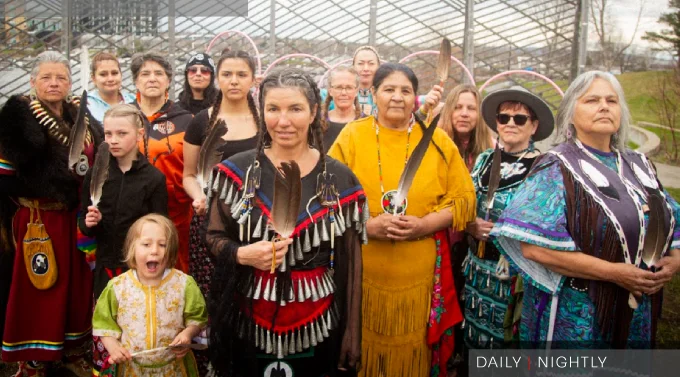
Award-winning Ojibwe singer-songwriter, multi-instrumentalist, humanitarian and educator Shy-Anne Hovorka has released her new single and music video, Raise My Fist.
Inspired by former Long Lake #58 First Nation Chief Judy Desmoulin, the song celebrates Indigenous strength, unity and the continuing journey towards reconciliation. It brings together more than 30 Indigenous and ally artists from First Nations, Métis communities and organisations across Canada.
A member of Lake Helen First Nation, also known as Red Rock Indian Band, with roots in Matachewan First Nation, Hovorka has spent more than two decades establishing a career in Canadian music that has combined songwriting with community and humanitarian work.
Her first three albums — Black Thunderbird, Pseudo and Interwoven Roots — have sold more than 15,000 copies worldwide and received airplay on Canadian commercial radio.
Her 2014 album Bones became a significant milestone, earning three Aboriginal Peoples Choice Music Awards for Best Country Album, Single of the Year for Be Your Girl and Best Album Design. Hovorka was also named APCMA Entertainer of the Year, one of three occasions on which she has received the honour.
In 2022, she released her fifth album, And Then, in response to the discovery of children’s remains at former residential school sites.
Released as a limited edition on a donation-only basis, proceeds from the album went to the Residential School Survival Society. CBC subsequently partnered with Hovorka on a gradual rollout of five songs from the album, while I Miss You was released to radio in 2023.
The story behind Raise My Fist began around three years ago when Hovorka attended a cultural sensitivity gathering at Long Lake #58 First Nation.
It was there that Desmoulin shared memories of growing up under the Indian Agent system, including the story of finding the courage as a young girl to stand up to the Indian Agent herself.
“Her story stayed with me long after the gathering ended,” Hovorka says.
Rather than immediately recording the song, Hovorka allowed it to develop over several years. Eventually, she realised that the track had become something much larger than a solo project.
“What surprised me most was that it stopped feeling like my song,” she says.
As people heard the song, they began asking to become involved, with Hovorka welcoming contributions from Indigenous singers, young people, dancers, hand drummers, traditional drummers, Métis artists, First Nations community members, settler allies, families and friends.
“What began as one person’s song became a community project,” she explains.
The song’s title is itself intended to carry a message of unity rather than confrontation.
“The image of the raised fist is often misunderstood,” Hovorka says. “For me, it isn’t a symbol of anger. It represents the courage to stand together, to speak the truth, and to refuse to let history or injustice define who we are.”
The song’s imagery also incorporates the eagle, which holds particular significance within Anishinaabe teachings.
“In Anishinaabe teachings, the eagle carries our prayers to the Creator and reminds us to live with wisdom, love, respect, bravery, honesty, humility, and truth,” Hovorka explains.
With Raise My Fist, Hovorka has transformed a personal response to one woman’s story into a collective musical statement, bringing together artists and communities in a project centred on remembrance, resilience and hope.
Raise My Fist and its accompanying music video are out now.