
A new study has highlighted the EV models with the highest MOT failure scores, with the Nissan E-NV200 topping the list and premium models also raising concerns
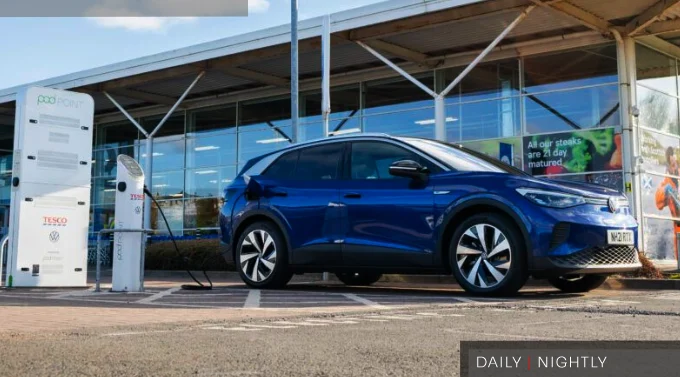
Electric cars may be cheaper to maintain than petrol and diesel vehicles in many respects, but a new study suggests some models could still leave drivers facing costly repair bills.
Insurance company ZEGO has analysed official UK government MOT data to identify electric cars with high rates of failures and defects, highlighting four models that could prove troublesome for owners.
The findings come as battery electric vehicles (BEVs) continue to gain ground in the UK new-car market, accounting for more than a quarter of new car sales, according to the figures cited by the company.
Despite having fewer moving parts than conventional combustion-engine cars, electric vehicles are not immune to maintenance problems. Their weight, tyre wear and braking systems can all contribute to issues when it comes to passing an MOT.
Sten Saar, CEO of ZEGO, explained that electric cars can be more susceptible to certain faults despite requiring less routine servicing.
He said EVs are around 40% more likely to fail on tyre-related issues than petrol cars, while regenerative braking can mean conventional friction brakes are used less frequently, increasing the risk of corrosion. The additional weight of battery packs can also place extra strain on suspension components.

The electric cars with the highest MOT failure scores
1. Nissan E-NV200
The Nissan E-NV200 received an overall score of 9.6 out of 10 in ZEGO’s analysis, putting it at the top of the highlighted models.
It recorded a failure-rate score of 1.8, described as the second-highest in the study, alongside scores of 2.3 for its failure-defect ratio and 1.7 for its minor-fault ratio.
Although electric vans can offer savings on fuel and routine maintenance, repairs and the replacement of worn components can add to the overall cost of ownership.
2. BMW iX
The BMW iX scored 9.3 out of 10, with ZEGO highlighting its dangerous-defect ratio score of 1.7.
The model also scored 1.5 for both its failure ratio and failure-defect ratio.
While electric powertrains can reduce the need for routine servicing, the iX’s premium positioning means certain repairs and replacement parts can be expensive. Items such as tyres and suspension components may also prove costly to replace.
3. Renault Zoe
The Renault Zoe also scored 9.3 out of 10, with a failure-defect ratio score of 1.8.
However, it recorded a comparatively low minor-fault ratio score of 0.7, suggesting its results were not uniformly poor across every category assessed.
The Zoe can benefit from lower routine servicing requirements than a conventional petrol or diesel car, but owners should still pay attention to the condition of its mechanical and electrical components to avoid potentially expensive repairs.
4. Tesla Model Y
The Tesla Model Y received an overall score of 9.2 out of 10 in the study.
ZEGO highlighted its dangerous-defect ratio score of 1.9, which it said placed the model sixth overall in that category. Its failure-defect ratio score was 1.5.
Routine maintenance on an electric car can be relatively straightforward, but that does not necessarily mean repairs will be cheap. Tyres, brakes and out-of-warranty mechanical issues can all add to ownership costs.
| Why can electric cars fail their MOTs? Electric cars are often associated with lower maintenance costs because they do not need engine oil changes and generally have fewer moving parts than petrol and diesel vehicles. However, that does not make them maintenance-free. Tyres can wear more quickly under the additional weight and torque of an EV, while suspension components may experience greater loads. Brake discs can also suffer corrosion if conventional friction braking is used less frequently. For prospective buyers, the findings underline the importance of looking beyond a car’s advertised running costs when choosing an electric vehicle. Checking tyre condition, suspension wear and brake components, alongside reviewing a used car’s MOT history, can help buyers identify potential problems before committing to a purchase. ZEGO’s findings do not mean every example of the models listed will fail its MOT, and the scores should be considered in the context of the company’s methodology and the underlying vehicle data. |