
A line-up of leaders…
When Ria Hebden launched Wonder Women in 2017, it was from a conviction many in the industry quietly shared: that despite decades of promises, structural support for underrepresented women in television and film was still patchy, inconsistent, and too often tokenistic.
Eight years later, what began as a grassroots network has grown into a full ecosystem — mentoring, podcasts, monthly meet-ups — and, increasingly, one of the most anticipated fixtures in the industry calendar.
On Friday 26 September, that journey culminates in the organisation’s boldest statement yet. The Wonder Women Conference 2025, the flagship event championing diverse women in the creative industries, arrives at the BFI Southbank — home to British cinema heritage — with 450 delegates, a starry roll-call of speakers, and a clear agenda: to build momentum at a time when diversity and inclusion initiatives are under unprecedented scrutiny.
The conference’s power lies as much in its variety as its prestige. This year’s line-up includes BAFTA Film Chair Anna Higgs, 5 News Editor Debbie Ramsay, Warner Bros. Studios Leavesden’s Emily Stillman, ScreenSkills chair Lisa Opie, and Channel 4 commissioning editor Rita Daniels.
Alongside them are changemakers from beyond the boardroom: Sophie Morgan, the disability activist and broadcaster; Nishma Patel Robb, founder of the creative advocacy collective Glittersphere; and Laura Johnson of Zebedee Talent, the agency reshaping ideas of representation on screen.

Each speaker represents a different facet of the creative landscape. Ramsay, for example, became the first Black editor of a national news bulletin in Britain; Patel Robb uses branding as activism; Lulu Featherstone’s Self Love Movement centres wellbeing in industries notorious for burnout; while Elina Teboul’s “Feminine Intelligence” reframes leadership for women navigating hostile or male-dominated spaces.
“The line-up shows the sheer breadth of what women bring to this industry,” Hebden says. “It’s not just about senior executives in suits — it’s producers, campaigners, life coaches, disability activists, creative directors. It’s everyone who makes the screen industries possible.”
Across a packed single day, delegates will move between keynote speeches, workshops and three major panel discussions — Positive Disruptors, Women at the Top in TV and How to Rise. The aim is not only to inspire but to provide concrete tools: career progression strategies, resilience techniques, and pathways into leadership.
Workshops are deliberately hands-on. A masterclass promises to get under the skin of systemic challenges, while networking sessions are carefully curated to build peer support systems beyond the day itself. “Conferences too often become about inspirational soundbites,” Hebden says. “We wanted this to be about action.”
That focus feels particularly urgent in 2025. Across the Atlantic, diversity and inclusion programmes have been scaled back in Hollywood studios under pressure from culture wars. In Britain, insiders privately admit DEI budgets have shrunk, with a greater emphasis on “neutral” talent pipelines. “Progress is being quietly erased,” Hebden warns. “And that makes our work matter now more than ever.”
Her concern is echoed by Melanie Hoyes, BFI’s Director of Inclusion. “The Wonder Women Conference is essential. Representation is not a box-tick exercise. It’s about sustaining careers, creating visibility, and ensuring women don’t leave the industry through lack of support.”
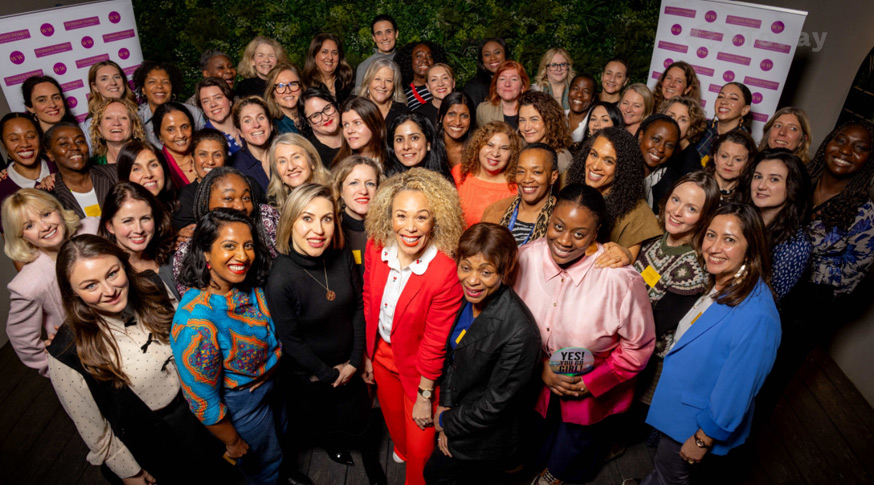
Wonder Women itself is now a Community Interest Company with an advisory board spanning law, media and coaching, and has launched the UK’s only year-long mentoring scheme for underrepresented women in television. Its monthly online gatherings draw participants from across the UK, while the podcast extends conversations beyond London.
“It’s a rare space where women don’t have to justify being in the room,” says Nicola Hill of Orchard Studios, one of Wonder Women’s advisors. “The conference brings that ethos into a concentrated, electric form.”
The choice of BFI Southbank as a venue is not simply symbolic — it roots the event in the cultural mainstream. In a year when headlines have focused on falling female representation behind the camera and the slow pace of change at commissioning level, Wonder Women offers a counter-narrative: not just to highlight the barriers, but to showcase those who are dismantling them.
For Hebden, the message is clear: “This is not just about women getting in the door, it’s about staying there, thriving there, and lifting others up as they rise. It’s about systemic change.”
Wonder Women Conference 2025
Friday 26 September 2025
BFI Southbank, London
Tickets: www.wonderwomentv.com