
From Havelock House to City Quays – the Belfast station that gave Northern Ireland its own voice…
As we continue our celebration of 70 years of ITV and wander around the regions, today we stop in Belfast. At 4.45pm on 31 October 1959, Laurence Olivier appeared on television screens across Northern Ireland.
The great actor opened a new station with poetry – Joseph Addison’s “The Spacious Firmament” – and a sense of occasion. For the first time, the province had its own commercial broadcaster: Ulster Television.
Halloween was no accident. The new company had less than a year to turn an abandoned linen factory on Belfast’s Ormeau Road into a working studio. It did so with a budget as tight as the deadline. Havelock House became both production centre and symbol: a place where a divided community could see itself on screen.
The opening night was a mix of imports and local touches: The Adventures of Robin Hood, 77 Sunset Strip, a wrestling bout, and Richard Hayward singing of Northern Ireland “in words and music”. Viewers in Dublin even phoned to complain about fuzzy reception. From day one, Ulster Television – or UTV, as it would later become – was more than just a relay of London schedules.

A broadcaster born of compromise
The franchise award itself had been carefully balanced. The Independent Television Authority wanted Catholic as well as Protestant shareholders, ensuring the new company reflected Northern Ireland’s divided society. The Duke of Abercorn and Earl of Antrim lent aristocratic clout, while the Belfast Telegraph and News Letter provided newspaper backing.
MacQuitty, the reluctant first managing director, nevertheless got the station on air. Within months, UTV was producing its own magazine show, Roundabout, fronted by Ivor Mills and Anne Gregg. By 1964, Newsview had arrived; by 1969, UTV Reports was setting the template for serious regional current affairs.
Finding a voice amid the Troubles
When conflict erupted in Northern Ireland at the end of the 1960s, UTV’s role changed overnight. Its reporters were suddenly documenting bombings, marches, funerals and politics for both local and network audiences. The nightly news became a communal ritual: sometimes sober, sometimes frightening, always necessary.
Shows like Good Evening Ulster offered analysis as well as headlines, while documentaries such as Insight dug deeper. In a society where trust in institutions was often thin, UTV carved out a reputation for being both professional and – crucially – local.

The oscilloscope years
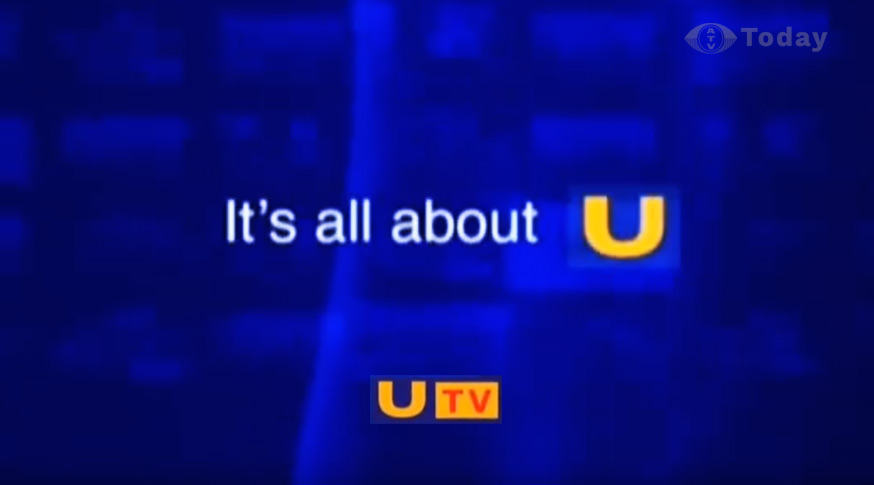
If BBC Northern Ireland felt like London looking in, UTV looked and sounded different. It’s very logo – the seven-dot oscilloscope pattern, joined by lines and set to the folk tune The Mountains of Mourne – gave it a distinct identity. Children could hum it; adults recognised it as shorthand for home.
The idents evolved with colour television in 1970, with a silver stick in the 1980s, and eventually CGI swoops in. But the principle remained the same: UTV was proudly itself. Long after other ITV stations had conformed to network graphics, UTV clung to its brand, a small act of independence that endeared it to viewers.
More than news: entertainment, farming, religion
While news defined its public role, UTV also excelled in local programming. Farming Ulster reflected the rural economy. McGilloway’s Way explored the landscape with quiet poetry. Cookery with Jenny Bristow became a staple. Religious broadcasts such as Morning Worship reached audiences far beyond Belfast.
On the network, UTV contributed to About Britain and Dramarama, while co-producing The Irish R.M. with RTÉ – a rare cross-border television partnership. For Channel 4, it made Ulster Landscapes, Trauma, and God’s Frontiermen. In the 1980s, it dabbled in light entertainment: Password, children’s shows Get Fresh and Ghost Train.
But its most popular output was often the simplest. Talk show Kelly, fronted by Gerry Kelly, became Friday-night appointment viewing, mixing celebrity interviews with a distinctly Northern Irish warmth.
The last of the in-vision announcers
One of UTV’s quirks was its continuity department. Long after ITV stations abandoned the practice, UTV announcers still appeared on screen to introduce programmes. Faces like Julian Simmons became minor celebrities, his camp, cheerful delivery adding personality to even the dullest network schedule.
When live in-vision continuity finally ended in 2016 – after 57 years – it marked the end of an era. The announcers lingered on tape until April 2020, when COVID became a convenient excuse for its now ITVPlc bosses to adopt national ITV branded playout in Northern Ireland. The network never gave it back.
Commercial twists and corporate turns
Like many ITV companies, UTV did not stay confined to broadcasting. It diversified into radio – owning TalkSport and local stations – online ventures, even launched its own secondary channel, UTV2. In 2015, facing financial pressures, it sold its television business to ITV plc for £100 million.
The sale ended more than half a century of independence. The UTV brand remained – for news, promos and a lingering sense of identity – but decision-making shifted firmly to London. Its ill-fated foray into the Republic with UTV Ireland (2015–16) was swiftly sold to Virgin Media.
In 2018, UTV left Havelock House for new City Quays studios.

Legacy and survival
Yet UTV endures. UTV Live remains one of the most-watched news programmes in Northern Ireland. Documentaries like Rare Breed: A Farming Year, Up Close and Hidden NI prove there is still an appetite for homegrown storytelling.
For older viewers, the memory of The Antrim Road start-up music, or of Julian Simmons cheerfully announcing Coronation Street, remains powerful. For younger audiences, UTV is simply the local face of ITV.
An identity stitched into the fabric
In the story of ITV’s 70 years, UTV stands out as both typical and unique. Typical, in that it followed the same arc as other regionals – fierce independence, diversification, eventual absorption. Unique, in that it operated in a society divided along political, cultural and religious lines, and somehow became a broadcaster trusted by both sides.
Today, the UTV silver stick no longer spins, the oscilloscope no longer hums, and ITV1 branding dominates the airwaves. But the spirit of UTV survives in its newsroom, in its archive, and in the memories of generations of viewers who grew up knowing that Northern Ireland had a channel of its own.