“Plough Your Own Furrow: The Good Life – A British Sitcom That Changed How We Laughed (and Lived)”…
When The Good Life first aired on BBC One in April 1975, it didn’t seem destined for greatness. A modest 5.9 million viewers tuned in to watch Richard Briers’ Tom Good quit his job to embrace self-sufficiency in the suburban jungle of Surbiton. The premise—two middle-class idealists turning their back gardens into a mini-farm—was as eccentric as it was visionary.
Yet fifty years on, The Good Life remains one of Britain’s most loved comedies, its message of sustainability and quiet rebellion feeling more relevant than ever.
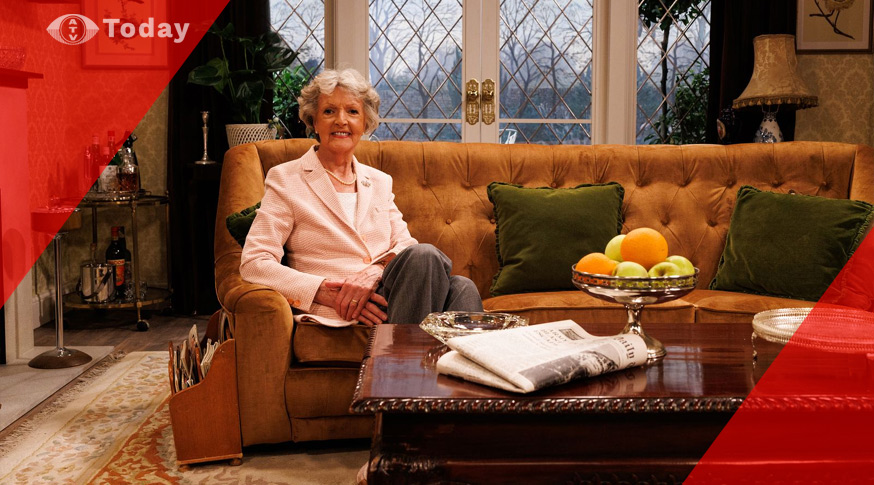
In a special anniversary documentary, Dame Penelope Keith—forever remembered as the gloriously snobbish Margo Leadbetter—takes viewers back to the genesis of the show that defined a generation’s idea of gentle rebellion. “It started slowly,” she reflects. “None of us thought we were making anything revolutionary. Then suddenly, people started stopping us in the street.”
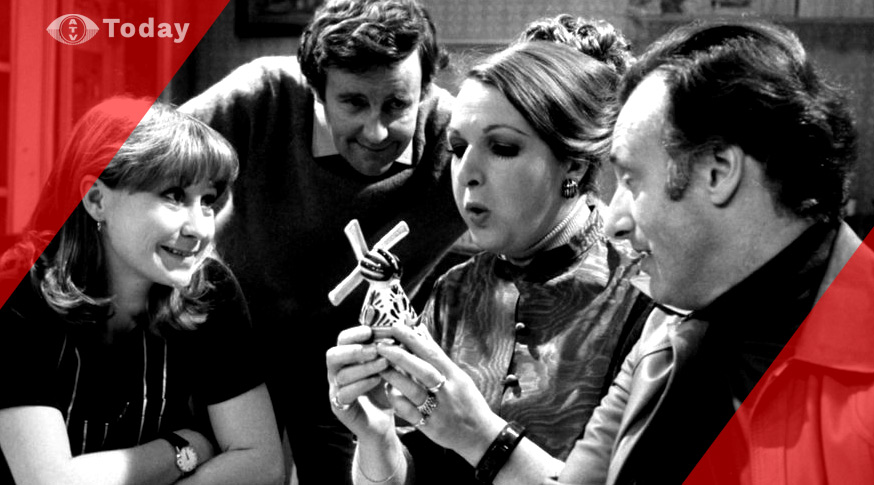
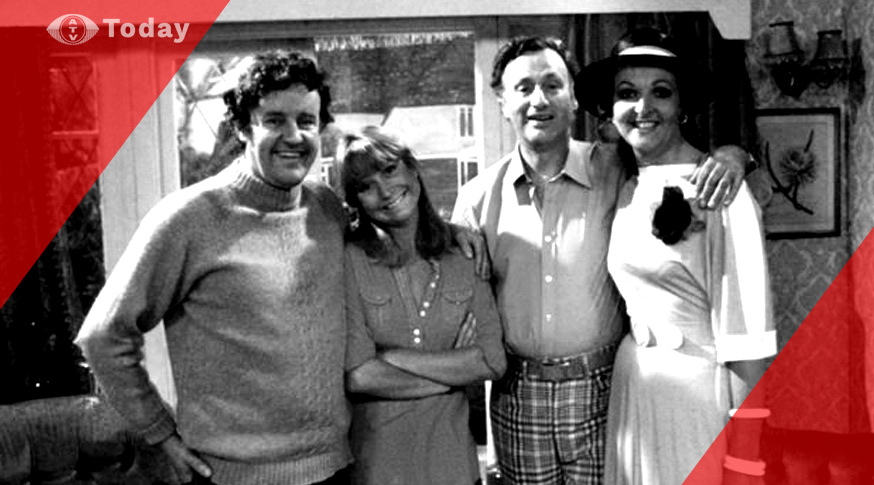
Created by John Esmonde and Bob Larbey, The Good Life captured the country’s imagination by combining suburban aspiration with anti-consumerist idealism. Tom and Barbara Good (Briers and Felicity Kendal) transformed their garden into a vegetable patch and livestock enclosure, to the horror of their perfectly polished neighbours Margo and Jerry Leadbetter (Keith and Paul Eddington). What emerged was not just a comedy about class and compost—but about identity, independence, and the quiet chaos of following your principles.
By the end of its four-series run in 1978, even Queen Elizabeth II was a fan. A special one-off episode, When I’m 65, was performed before Her Majesty and the Duke of Edinburgh at BBC Television Centre—a Royal Command Performance that remains one of the most remarkable events in sitcom history.
Goldie, the Blue Peter dog, famously urinated on the studio floor just hours before the Queen’s arrival. “Well,” Keith laughs in the new documentary, “if that doesn’t sum up British television, I don’t know what does.”
From slow start to national treasure
Here’s how The Good Life grew from humble roots to national obsession:
-
March 1975: The first episode is recorded before a live audience at BBC Television Centre’s TC8 studio.
-
April 1975: Plough Your Own Furrow airs, drawing just 5.9 million viewers—a disappointment by 1970s standards.
-
May 1975: Ratings rise to 7.5 million by the season finale, convincing the BBC to commission another run.
-
December 1975: Series two begins, giving more screen time to the increasingly beloved Margo and Jerry.
-
January 1976: 12 million people tune in for the finale, Home Sweet Home.
-
September 1976: The third series becomes a bona fide hit, averaging 15.7 million viewers.
-
December 1977: The Christmas special, where the Leadbetters are forced into a frugal festive with the Goods, reaches an astonishing 17 million viewers.
-
June 1978: The Royal Command episode is performed for the Queen. Live coverage of the Hungary v France World Cup match is even cut short so the broadcast could begin on time.
-
Beyond: The show inspired everything from a Jackpot comic strip (It’s a Nice Life, 1979) to a parody in The Young Ones (1984), and later the affectionate mockumentary Life Beyond the Box: Margo Leadbetter (2003).

The making of The Avenue
Much of The Good Life’s magic came from its authenticity. The exteriors for The Avenue, the fictional suburban street where the Goods and Leadbetters lived, were filmed on Kewferry Road in Northwood, northwest London—chosen for its proximity to BBC Television Centre.
Real homeowners had their gardens transformed into vegetable patches and pig pens, for which they were paid £50 per episode (around £500 today). Between recordings, BBC crews painstakingly restored the lawns to their tidy suburban glory.
Behind the camera, production designer Tony Oxley dreamed up Tom’s ramshackle “customised cart”—a vehicle cobbled together from a park bench and miniature tractor, complete with puffing smoke and comic bangs. Costume designer Sue Collins poured the budget into Margo’s Harrods wardrobe, while Barbara’s dungarees came from second-hand rails. “They used to joke that Margo wore Selfridges while Barbara wore self-sufficiency,” says Keith.

Television history is full of near misses, and The Good Life was no exception. Peter Bowles was originally offered the role of Jerry Leadbetter but turned it down to appear in Alan Ayckbourn’s Absent Friends. Ironically, his co-star in that play was Richard Briers—who pointed out that The Good Life recorded on Sundays, meaning Bowles could have done both jobs. “He never quite forgave me for that,” Briers once said.
Meanwhile, Hannah Gordon declined the part of Barbara, feeling it too similar to her previous work, paving the way for Felicity Kendal’s star-making performance. Alan Bennett was offered a cameo in the Royal Command special but politely declined by postcard, leaving George Cole—soon to be Minder’s Arthur Daley—to take the role.
The show’s trademark opening animation, a bird looping through a golden sun, was the work of designer Oliver Elmes, later responsible for the iconic Doctor Who title sequences of the 1980s. Composer Burt Rhodes, who scored Dr No and The Benny Hill Show, created the jaunty theme tune that became synonymous with suburban escapism.
Notoriously, one of the show’s most beloved episodes, The Windbreak War, nearly didn’t feature its most famous scene. Originally, only Tom and Jerry were meant to get drunk, but Keith and Kendal suggested that the women join in. The BBC initially objected to showing “tipsy ladies” on television, but the writers refused to back down.

The resulting four-way drinking scene is now a classic, showing the quartet at their chaotic, comedic best. “We were just supposed to act merry,” said Briers, “but by the end, I think we actually were.”
The animals, too, became characters in their own right: Pinky and Perky the pigs, Lenin the cockerel, Geraldine the goat, Olivia the chicken, and Margo the goat (yes, really). When Lenin escaped onto a bus in one episode, the production team lured him inside with chicken feed and a few hens for company.
When The Good Life bowed out in 1978, the BBC briefly floated a spin-off centred on Margo and Jerry. Both Keith and Eddington declined—rightly, perhaps, sensing that the magic was in the balance between aspiration and anarchy.
Even in the 21st century, the show’s ethos has found new life. In 2011, Giles Coren and Sue Perkins attempted to recreate Tom and Barbara’s suburban smallholding in Giles and Sue Live the Good Life, proving that the idea of chucking it all in and growing your own carrots still speaks to a restless modern Britain.
In The Good Life: Inside Out, Keith sums up the show’s enduring charm with her usual sharp wit. “It wasn’t political, it wasn’t rebellious—it was simply human. It was about four people trying to do their best, and sometimes failing spectacularly. That’s why it worked then, and why it still works now.”
The Good Life: Inside Out airs on U&Gold, Tuesday October 28th at 9pm