
From January daytime programmes are moving to new studios amid cost-cutting…
Alison Hammond has publicly acknowledged the toll of major behind-the-scenes changes at ITV Daytime, posting a message of thanks and solidarity with staff following a period of significant upheaval across the broadcaster’s flagship morning programmes.
In a social media post shared today (Saturday, 13 December), the This Morning presenter praised colleagues both on and off screen, paying particular tribute to production teams affected by redundancies linked to ITV Studios’ ongoing restructuring of its unscripted division.

“Thank you to all the staff and crew behind the scenes for everything you’ve given, hearts and souls, particularly in such difficult circumstances with all the changes coming,” Hammond wrote. “Wishing everyone impacted strength, support and brighter days ahead.”
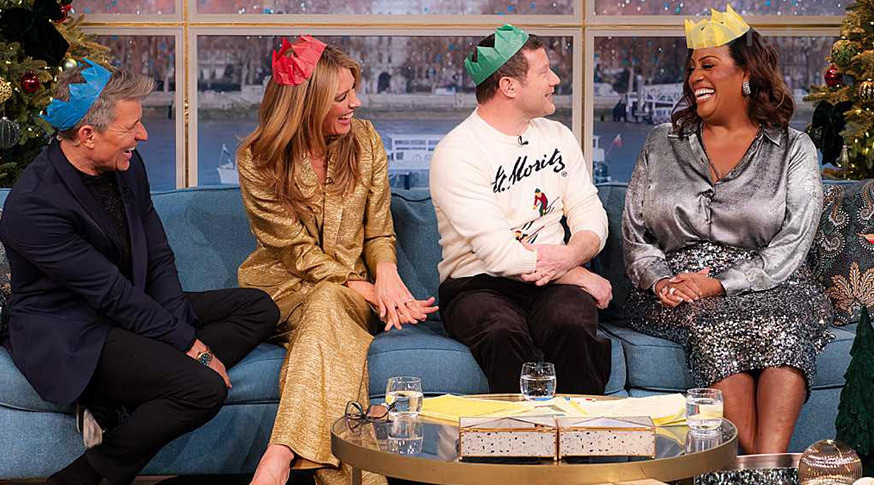
The post came a day after Hammond co-hosted a festive This Morning alongside Dermot O’Leary, her presenting partner of the past five years, whom she also described as a “legend”. But it was her reference to the “difficult circumstances” facing staff that struck a chord, as ITV presses ahead with one of the most significant overhauls of its daytime operation in years.
Earlier this year, ITV Studios announced it would merge its Daytime and MultiStory Media labels under a single expanded MultiStory Media banner from January 2026.
The move brings together some of ITV’s most recognisable programmes – including This Morning, Lorraine, Loose Women, Peston, The Martin Lewis Money Show, Come Dine With Me and For the Love of Dogs – alongside an extensive slate of documentaries and factual programming.

The restructuring is designed to consolidate live magazine shows, factual entertainment and investigative documentaries within one “future-facing content business”, overseen by Emma Gormley, ITV Studios’ director of daytime, who becomes managing director of the enlarged MultiStory Media operation.
While ITV has framed the merger as a strategic realignment to strengthen its unscripted output, the changes have also resulted in substantial job losses across daytime production teams, with reports suggesting staffing levels have been significantly reduced as roles and resources are combined.
Further disruption is set to follow in January 2026, when Lorraine, This Morning and Loose Women relocate to a new shared base at The H Club Studio in Covent Garden. The move will see the three programmes broadcast from a single two-floor studio complex featuring a 360-degree LED set and a centralised remote gallery, operated by Gravity Media, handling live output across all shows.
ITV has said the relocation will create greater “synergy” between teams and reduce costs, with the trio of programmes collectively producing hundreds of hours of live television each year.
Transmission schedules will also change: Lorraine will move to a shorter, seasonal slot, while Good Morning Britain is extended during off weeks – it is relocating to ITN, home of ITV News for its new era – and Loose Women will revert to a 30-weeks a year output, as it had done until a decade ago.
Against that backdrop, Hammond’s message reads as a rare on-the-record acknowledgement from a leading on-screen figure of the human impact of the changes.
“Grateful for this team and the incredible work they do,” Hammond wrote, adding simply: “Adore and love you all.”
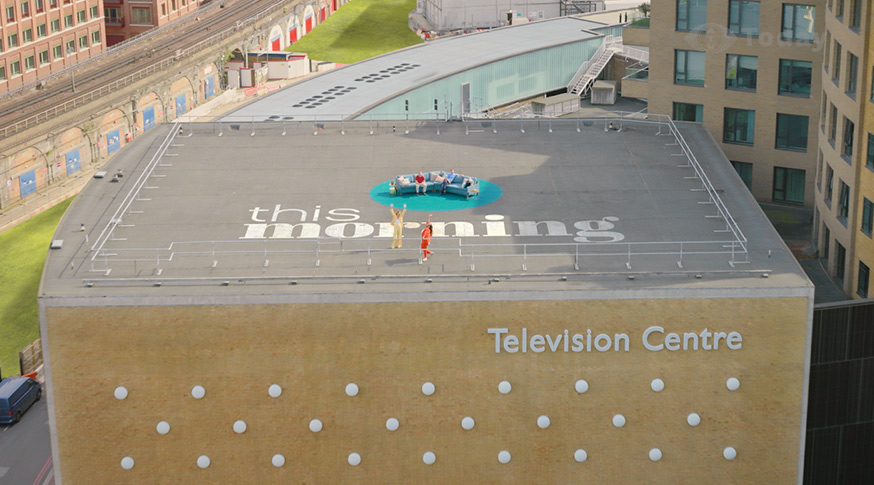
ITV Daytime began broadcasting the very first weekend of the network’s life in 1955, however in those far distant days the television regulator was much stricter than today, and ITV had a ‘quota of hours’ it could broadcast per day!
This eventually saw daytime virtually abandoned in order to put more hours of television out in the late afternoon and evening which was more profitable. The occasional midday show survived regionally such as Lunch Box (in the Midlands), The One O’clock Show (North East) and One O’clock Gang (Scotland) but very little was broadcast in daytime during the 1960s.
In 1972 ITV afternoon programming was fully restored and in 1988 mornings were re-introduced as the restriction on broadcast hours were first relaxed and then finally erased.