
Running up that Hill gets a new lease of life…
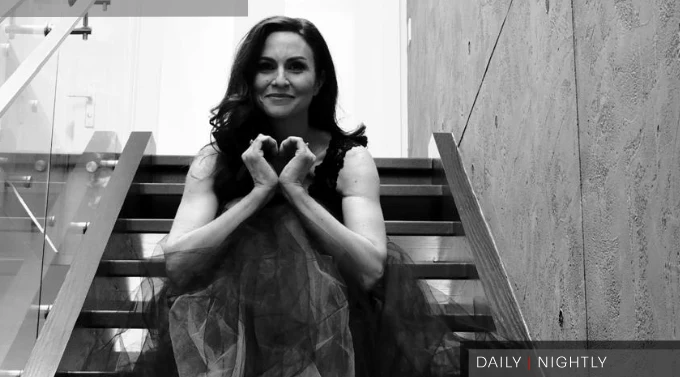
Toronto-based, Newfoundland-born singer-songwriter Tonia Evans (Cianciulli) has just released a deeply personal interpretation of Kate Bush’s Running Up That Hill, offering a raw and emotional first taste of her forthcoming album Love Me Till I’m Me Again.
For Evans, the song represents far more than a reinterpretation of a classic. She describes it as the one song capable of carrying the emotional weight of the most difficult year of her life.
A year ago, Evans filed for divorce after 23 years of marriage, following the discovery of a betrayal that she says shattered a relationship she had believed in completely. The experience, she explains, forced her to confront not only the end of her marriage but also the years in which she had lost touch with her own instincts and identity.
“Healing through betrayal trauma has been messy, emotional, and heartbreaking as a woman, a mother, and an artist.”
Yet Evans says the experience will not define her. Instead, she believes it has made her stronger, more resilient and more unapologetic.
Running Up That Hill had been in Evans’s thoughts for years, but it wasn’t until January 2026, during one of the lowest points of her life, that the opportunity to record it suddenly arrived. Given just 24 hours to select a song, rehearse it and prepare for a one-hour vocal session, Evans immediately knew which song she had to choose.
“I immediately knew this was the moment for Running Up That Hill,” she recalls.
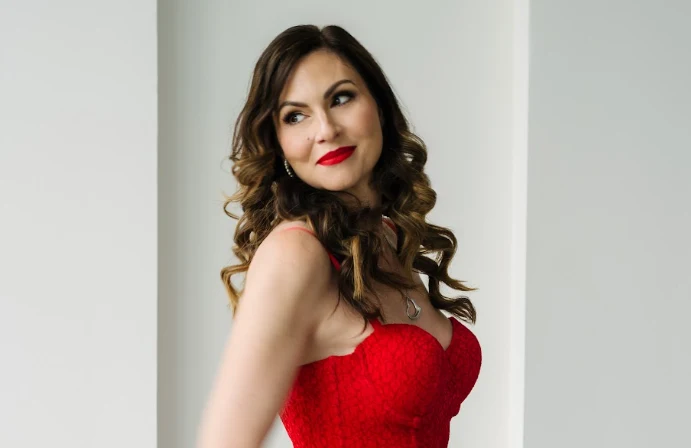
She dragged herself into the studio, trusting an opportunity that had appeared almost spontaneously. Working with engineer Anthony Wright and vocal coach Lorraine Lawson, Evans found the emotional centre of the performance in just a handful of takes.
“There were goosebumps. There were tears. We got what we needed,” she recalls.
The experience proved profoundly personal. As she sang Bush’s famous words about making a deal with God, Evans says the lyrics no longer felt as though they were directed towards another person.
“I was singing them to myself.”
That shift in perspective is central to Evans’s interpretation. For her, the song isn’t about two lovers trying to understand one another. It is a conversation between the woman she has become and the younger version of herself whose voice she says she ignored for years.
“It is an apology to my inner child, to the voice I ignored, dismissed, and even gaslit into silence,” she explains. “Betrayal trauma isn’t only about infidelity. Sometimes the deepest betrayal is abandoning yourself.”
Her journey towards understanding that idea was influenced in part by her training with the Institute of HeartMath, where she learned about the ways in which the heart and body can recognise danger before the conscious mind is able to process it. Looking back, Evans says that lesson took on an entirely different significance.
The recording deliberately avoids excessive polish. Instead, Evans wanted the performance to retain its vulnerability and imperfections.
“I am no longer interested in hiding behind the technical excellence or carefully curated appearances of the classical music industry. I am interested in truth.”
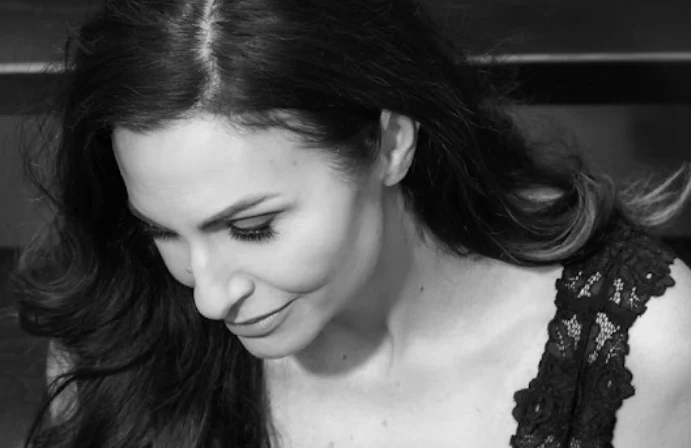
That philosophy extends to the accompanying music video, directed by DIMMANTI. Shot entirely in black and white, the film uses the contrast as a visual metaphor for honesty and features a conversation between Evans’s present self and the younger woman she believes had always known the truth.
“After living through years of deception, I believe more than ever that honesty is the only path to freedom, even when it hurts,” she says.
The single is produced, recorded, mixed and mastered by Dima Graziani, who also contributes piano and synthesizer. His textured, cinematic approach complements the emotional intensity of Evans’s vocal performance.
Running Up That Hill follows Evans’s previously released originals Bravery, Churchyard Roses and Thousand Cries. Her forthcoming album, Love Me Till I’m Me Again, also features a collection of carefully chosen covers, including Lightning Crashes, Runaway, Fix You and Say My Name.
Each song, Evans says, forms part of the soundtrack to her healing.
Her musical journey began with church and classical music before she established herself as a performer with the Cambridge Symphony Orchestra, Toronto Concert Orchestra, Southern Ontario Lyric Opera and Casa Loma Symphony Orchestra.
Now, with Love Me Till I’m Me Again, Evans is reclaiming another important part of herself. As she returns to her family name, she is also stepping into what she describes as a new chapter built around truth, healing and self-discovery.
“Welcome back, Tonia Evans,” she says. “This next chapter of music is rooted in radical honesty, healing, and rediscovering who I am.”