Birmingham City University expert says the country legend’s decision to retain control of her publishing helped secure her remarkable legacy

Dolly Parton’s greatest achievement may not have been one of her countless hit songs, but the decision to retain control of the music she created.
That is the view of a Music Industries expert at Birmingham City University, who says Parton’s business acumen was just as important to her extraordinary career as her songwriting and distinctive voice.
Parton died on 25 August at the age of 80, prompting tributes from around the world to a performer whose career stretched across music, film, television, business and philanthropy.
But behind the rhinestones and instantly recognisable songs was a shrewd businesswoman who understood the value of owning her work.
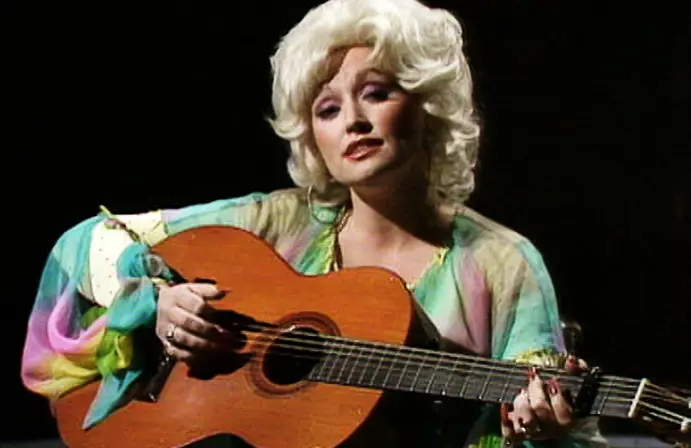
Dr Matt Grimes, Senior Lecturer in Music Industries and Radio at Birmingham City University, says Parton’s approach to copyright was particularly significant in an industry historically dominated by men.
“Many remember Dolly as a country singer songwriter, but above all of that she was also a very astute businesswoman, philanthropist and role model to many female musicians and performers,” said Dr Grimes.
“Dolly rose up through an industry that was, and still is, dominated by men whose major intention is to make as much money from exploiting their artists.”
One of Parton’s most important decisions came relatively early in her career. In 1966, she established her own publishing company, taking steps to protect her interests as a songwriter and ensuring that she retained control over her compositions.
“She made a rare move in setting up her own publishing company in 1966, just one of the ways Dolly was an innovator in securing her rights as a female songwriter,” Dr Grimes explained.
Her decision proved financially and creatively significant.

According to Dr Grimes, retaining nearly all of her publishing rights contributed substantially to an estate estimated at around $650 million.
“The retention of copyright is absolutely key in the music industry, and it could be argued that Dolly set a standard and an inspiration for many subsequent female artists,” he said.
Parton’s understanding of the value of her songwriting became particularly apparent through the continued life of her catalogue.
Songs including “Jolene”, “9 to 5”, “I Will Always Love You” and “Love Is Like a Butterfly” have become part of popular culture, generating value for their creator across generations.
Her songwriting also became a significant source of income beyond her own recordings. Perhaps most famously, Parton retained the publishing rights to I Will Always Love You, allowing her to benefit when Whitney Houston’s hugely successful version of the song introduced it to an entirely new audience.
That understanding of ownership stands in striking contrast to the experiences of many performers who have found themselves fighting to regain control of their own work.
Dr Grimes points to Taylor Swift as a more recent example.
“We all remember the very public battle Taylor Swift endured over the rights to her own songs, and knowing both her and Dolly were close, I have a feeling Taylor may have looked to Dolly for business guidance.”

Parton’s influence extended far beyond copyright and commercial success.
She built a vast entertainment empire while maintaining a reputation for generosity, becoming particularly well known for her philanthropic work. Through initiatives including the Dolly Parton’s Imagination Library, she helped provide books to children, while also donating significant sums to charitable causes and medical research.
That combination of business success and philanthropy became an important part of the Dolly Parton story.
Tributes following her death have repeatedly highlighted the same qualities: her talent, generosity, intelligence and ability to use her success to help others.
For Dr Grimes, however, the business lessons contained within Parton’s career deserve to be remembered alongside the music.
Parton entered an industry where performers — particularly women — could find themselves with limited control over their own careers. Rather than simply accepting that system, she made decisions that allowed her to retain a stake in the work she created.
Her legacy, therefore, is not simply a catalogue of country songs. It is also a lesson in the importance of knowing the value of your own work.