
Sixteen years on we take a look at what media changes were correct and what missed the mark…
In 2010 Conservative MP Ed Vaizey (then Shadow Culture Secretary) laid out a sweeping media policy agenda in an interview with ATV Today.
He urged sweeping efficiency at the BBC (“cut waste and bureaucracy”), a freeze to the licence fee, and a root-and-branch reform of broadcast governance. He warned against using licence-fee money for regional news consortia, championed Channel 4’s public role, and envisioned a deregulated, platform-agnostic local media sector.
Now – 16 years on – many of those ideas have played out in the real world. Some came true (even beyond what he foresaw), others fizzled, and a few were turned on their head.
Below we take each key claim in turn, quoting Vaizey’s 2010 positions and comparing to what actually happened (with contemporary sources).
Related Articles: Don Foster’s 2010 Media Forecast: Hits and Misses – ATV Today | Sion Simon’s 2010 Media Forecast: Hits and Misses – ATV Today
BBC efficiency, licence fee and governance

Vaizey in 2010 blasted BBC “waste” (for example citing “£13.8 million on taxis” in 2007–08) and opposed raising the licence fee. He urged freezing or even cutting it,“return[ing] spare money to licence-fee payers.”
Vaizey’s warning found some resonance. In fact, the newly-elected Coalition government froze the licence fee at its 2010 level (£145.50) for six years (to 2017), effectively a real-terms cut.
(This was part of tough BBC negotiations in 2010 – covering World Service funding, rural broadband, local TV, and S4C costs.) So in that sense the Conservatives did freeze the fee as he urged; licensees saw no annual inflation rise through the 2010s. However, after 2017 the fee resumed inflationary uplifts (and currently continues). The later Conservative manifesto even pledged to scrap the licence fee by 2027, but in practice the UK has not yet done so.
Vaizey also called for far greater financial transparency and audit (even a National Audit Office review of BBC spending on stars and cars). While the NAO now occasionally scrutinises aspects of the BBC (e.g. value-for-money reports), the Beeb still largely self-regulates its accounts under the Royal Charter.
The corporation did for a time curb some expenses and pledged to increase the share of fee spent on programmes, but there has been no dramatic revelation or return of “spare” licence money to the public.
On top-slicing: Vaizey “wholly oppose[d] top-slicing” the licence fee. In practice the BBC ended up funding the World Service itself (a form of top-slice) and taking on other obligations, but it was never a separate levy on households.
One big reform did happen, though on a longer timescale. Vaizey urged abolishing the BBC Trust and tightening governance. Indeed, the 2016/17 Charter review resulted in a new unitary BBC Board replacing the Trust.
This echoes his 2010 pledge: the BBC Trust was abolished and oversight brought under Ofcom (for impartiality and standards) and the new board for strategy.
On programming focus, Vaizey wanted “high quality public service” content over commercial online projects. The BBC has by now refocused somewhat on core TV and radio, though it maintains extensive online and streaming services.
Judged overall, many of Vaizey’s BBC goals were at least partially achieved: the licence fee was held steady for years, and the Trust was scrapped in favour of a more streamlined governance model.
Whether the BBC bureaucracy was significantly “cut” is harder to say – budgets have mostly tightened, but the core output remains large.
Channel 4: Stay in the public sector
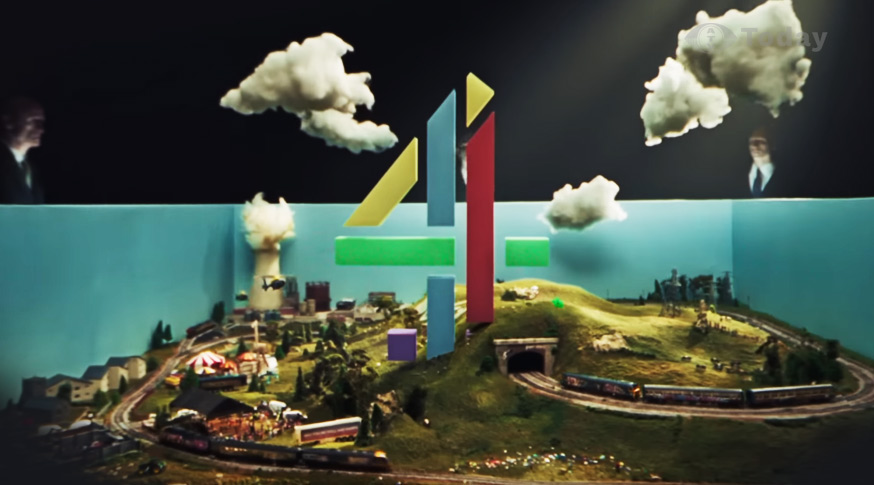
Vaizey in 2010: “We think Channel 4 plays a key role in providing public service competition to the BBC,” and should not be privatised.
Channel 4 remains publicly owned (though commercially funded). In fact, the Conservative party eventually reversed course on an idea to sell it off: In 2017 the Tories at times flirted with a sale (hopping between proposals to sell or keep it), but ultimately the plan to privatise was dropped.
In early 2023 the government officially decided Channel 4 “would not be privatised”. In that sense, Vaizey’s original stance (“No” to selling C4) turned out to align with reality – Channel 4 remains a public corporation. The reasons are political, but the outcome is that Channel 4 still exists as a publicly owned public-service broadcaster (and now even a listed heritage building, its HQ).
His rationale – that C4 provides public-service competition – is still cited by defenders of Channel 4 today. Conversely, Conservative Culture Ministers like Nadine Dorries in 2021 argued Channel 4 needed private capital to compete with Netflix. But for now Vaizey’s view has prevailed: no sale, and Channel 4 keeps its remit albeit with an evolving content strategy.
Local news and media reform
Vaizey on local news consortia (Digital Economy Bill): “No… licence fee to prop up regional news simply casts a failed regional TV model in aspic… We do not support these provisions.”
Here Vaizey was exactly on message with the incoming Coalition. The planned Labour-funded “news consortia” (digital news pilot schemes) were indeed scrapped in mid-2010, as Jeremy Hunt announced that the licence fee would no longer be used this way.
Hunt’s statement used almost Vaizey’s language: local pilots were misguided, funds were better spent (e.g. on broadband), and the licence fee would be freed from that burden.
In practice, the pilots and consortia never launched – Labour’s plan was killed – so Vaizey’s prediction that they’d be “legally unpicked” under a Conservative government came true.
Vaizey went further, painting a vision of a “radically different, forward-looking local media sector” — beyond just local TV. He wanted deregulation of cross-media rules so local papers, radio and TV could merge across platforms.
In 2011 the Coalition did remove local cross-media ownership restrictions, allowing newspapers, local TV and radio to combine more freely. That part of his vision came to pass immediately. (For example, a newspaper can now own a radio station in the same city without the old bans.) The government’s aim was to help struggling local media by letting them pool resources.
Did that create a thriving local-media ecosystem? The answer is mixed.
There was indeed a boom of startup local TV stations around 2013–14 (London Live, Estuary TV, Big Centre TV Birmingham etc.), helped by a small government subsidy. But many struggled commercially.
By 2014 Ofcom warned “very unlikely that all [local] channels will succeed,” after some collapsed before even launching.
Many local newspaper groups meanwhile continued to cut jobs or close (hundreds of local papers closed since 2010). So Vaizey’s hope of “profitable, hungry and ambitious local radio, newspapers and websites” has been only partially met.
The deregulated framework is there, but market forces have been brutal. Local TV, in particular, never got the “national network” feeder he imagined – instead, each local station largely fends for itself, unlike the US affiliate-network model he cited.
In short, cross-media deregulation happened, but the “sustainable independent local media” Vaizey envisioned remains a work in progress.
STV vs ITV & News Impartiality

Vaizey on the STV/ITV feud: “We believe deregulation will help… If we got rid of cross-media ownership rules, STV or a new entrant would be able to do something commercially viable.”
This refers to a long-running dispute in the 2009–2011 period between Scottish broadcaster STV and ITV plc. In April 2011 STV agreed to pay £18m in cash and credits to settle legal claims with ITV.
That ended the bitter fight, essentially by private negotiation (and with STV agreeing to take national news in exchange). The Government itself did not “bail out” either side. In practice, deregulation of media rules (the very changes in 2011) did occur, but STV’s issues were resolved commercially, not by policy change.
Vaizey’s comment that “public money has stopped this thinking” may have referred to planned subsidies which never arrived. In short, deregulation ultimately did happen – as above – but STV/ITV were resolved by a market settlement (STV kept its licences and relaunched with the ITV news feed).
On impartiality (“Fox News for example”): Vaizey flatly opposed relaxing impartiality.
And indeed the UK has not moved to an overtly partisan news model. Ofcom’s due-impartiality rules remain in force for all broadcast news. Even Fox News programming (imported via Sky) was found to breach UK impartiality standards in 2021. (Sky News itself continues to abide by due impartiality.)
So on this point he was prescient: British TV news remains regulated for balance, and no U.S.-style biased channel has taken root.
London 2012 and the sports legacy
Vaizey on the Olympics (with a sly wink): “Everything is on time and to schedule… [Our] Lottery reforms will help build a lasting sporting legacy… [via] Kelly Holmes’ legacy taskforce.”
On schedule, yes: London 2012 went ahead on time and under (its budget was lower than many expected). Vaizey’s faith in official timetables was justified: the venues were ready and the Games ran successfully.
On legacy, the government did boost sports funding as promised. Ministers raised sport’s share of the National Lottery to 20% by 2012, adding about £50m a year to community and youth sports. This was a direct fulfilment of the reforms Vaizey cited. So, in terms of money, the legacy got a clear boost: with Sport England and UK Sport receiving more funds to engage schools and communities.
However, translating Olympic success into widespread fitness has proved harder.
Critics in 2012–15 noted that school sports funding and participation lagged. For instance, just weeks after the Games The Guardian lamented that cuts to school sports programs meant the post-Olympic “feelgood factor” was not matched by coherent policy.
Kelly Holmes’ legacy report did emphasise more youth involvement and physical education, but many school-sport initiatives were later scaled back. In short, the infrastructure funding reforms went ahead, but the broader cultural legacy (millions inspired to exercise) remains only partially fulfilled.
Vaizey was accurate that the Games themselves would be delivered on time, and his calls for more lottery-funded sport were acted on. The optimism about a sweeping sports legacy, however, proved more elusive in practice.

Timeline of key UK media developments (2010–2026)
- Oct 2010: Coalition government freezes BBC licence fee at £145.50 for six years (a real-terms cut) and forces BBC to fund World Service, S4C, local TV etc.
- June 2010: Culture Secretary announces scrapping of Labour’s local news consortia (the “IFNC” scheme) in Digital Economy Bill.
- Jun 2011: Government issues new Media Ownership Order removing all local cross-media ownership rules (deregulating local papers/radio/TV mergers), as Vaizey advocated.
- Apr 2011: Scottish broadcasters STV and ITV settle their dispute (STV pays £18m).
- 2012: London Olympics held successfully. Sport’s lottery share is raised (from 16% to 20%).
- 2013–14: Launch of a wave of “local TV” channels under Ofcom licence (e.g. London Live); within a year Ofcom warns many will not survive.
- 2017: New BBC Royal Charter takes effect – the BBC Trust is abolished and a single-board governance model created, fulfilling Vaizey’s call for Charter reform.
- 2022: Media white paper proposes privatising Channel 4, but incoming Culture Secretary reverses course. In Jan 2023 Govt announces Channel 4 will remain in public ownership.
- 2023: Ofcom now oversees BBC (a change since Vaizey’s day); local media continue to shrink (hundreds of newspapers closed); streaming services dominate UK TV landscape.
As for Ed himself. He stepped down as an MP leaving as part of the 2019 General Election. In 2020 he was elevated to the House of Lords as Baron Vaizey of Didcot.
In more recent years he has worked for News UK as a presenter on TimesRadio.
2 Replies to “Ed Vaizey’s 2010 Media Forecast: Hits and Misses”
Comments are closed.