
In 2010 as a general election loomed ATV Today spoke with Labour, Lib Dems and Conservative MP’s about the future of broadcasting, here we look sixteen years on what predictions they got right and wrong.
The third interview on the future of broadcasting was with then Labour minister Sion Simon
Related Articles: Ed Vaizey’s 2010 Conservative Party Media Forecast: Hits and Misses | Don Foster’s 2010 Media Forecast: Hits and Misses – ATV Today
In the 2010 interview Labour minister Sion Simon promised a strong, independent BBC (no Charter rips or fee freezes), pledged to keep Channel 4 public, backed a new system of local news consortia, and insisted on strict news impartiality.
He also vowed London’s 2012 Olympics would be delivered on time and leave a sporting legacy. Sixteen years on, we examine which of Simon’s pledges came true and which did not, with quotes and evidence along the way.
BBC funding and governance
In 2010 Simon vowed to respect the multi‑year licence fee settlement and not “rip up” the Charter. He said the next review would consider the BBC’s scope and governance.
Simon’s commitment to a “strong, vibrant, independent BBC” was largely honoured. The 2010–15 Coalition froze the licence fee for a few years (rather than cutting it), and no government has rescinded the BBC’s Charter – the 2016 Charter Review reinforced PSB funding rather than abolishing it.
At the 2016 review the government agreed to raise the fee with inflation and keep the BBC mostly as before. Simon’s call for governance reform also materialized: the BBC Trust was abolished in the 2017 Charter renewal and replaced by a new unitary board (with Ofcom taking on oversight duties).
However, his warning against top-slicing the licence fee went unheeded: from 2014 the BBC itself was made to fund the World Service and parts of S4C, effectively a hidden “top-slice” of licence income. In the end, Simon was right that the Charter would be respected (no rip-up) and did change governance, but the government did leverage the licence fee for other projects, contrary to his stance.
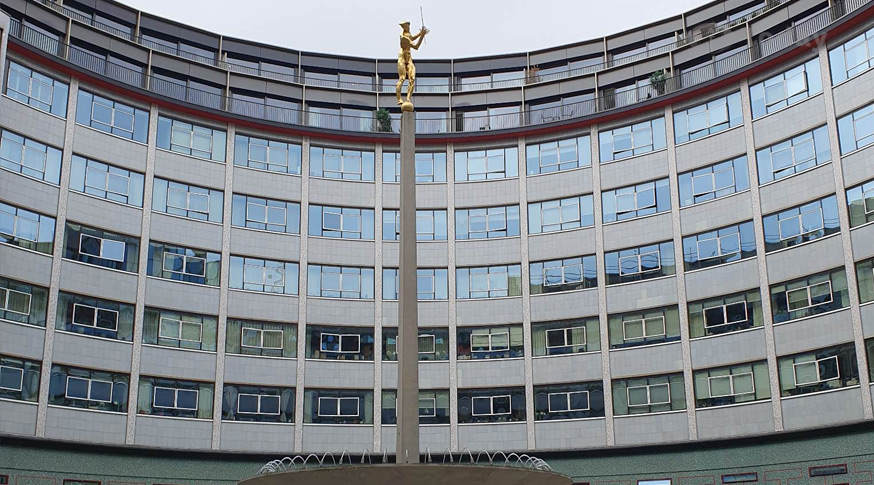
Channel 4’s future
Channel 4’s London headquarters. Simon insisted “absolutely not” on privatisation – Channel 4 is still public. In 2023 the government formally confirmed Channel 4 will remain in public ownership.
Simon flatly rejected any sell-off of Channel 4. Over the past decade Channel 4 indeed stayed in public hands. Conservatives briefly revived privatisation plans (2015 and 2018 manifestos), but by 2023 the government abandoned the idea.
The Culture Secretary announced Channel 4 “will remain publicly owned”. Thus Simon’s view was vindicated: C4 is still publicly owned and protected by law. He was also right that its remit has expanded digitally. (For example, Simon pointed to “4IP” digital investments – Channel 4 did launch a £20m digital fund in 2009–15 and has invested in streaming services like All 4.)
Today Channel 4 continues its mix of hit shows and experimental content, as Simon envisaged. A purely commercial owner might indeed have slashed such diversity, so his warning about short-termism proved prescient.
Local and regional news
Simon championed Labour’s plan for Independently Funded News Consortia (IFNCs) to save local journalism. He said IFNCs would bring plurality to local news and warned regional ITV news “will disappear” without them.
In practice, this pledge was overturned. When the Coalition took power, Culture Secretary Jeremy Hunt scrapped the IFNC pilots (announced 8 June 2010). By 2013, the planned “consortia” never launched – Simon’s critics (and he himself) had warned the Tories would block them.
Instead, the BBC inherited a mandate to expand regional news, and commercial ‘local TV’ licences were auctioned such as London Live, Big Centre TV Birmingham etc. Ironically, Simon’s claim that “there must be plurality – it cannot be right that only the BBC provides local news” proved only partly true.
Today the BBC has dramatically increased local bulletins, but independent local outlets remain scarce.
Ofcom now concedes that many of the new local TV channels are struggling: in 2014 it warned it was “very unlikely” all local stations will succeed. Simon also complained that Tory local-news ideas were not credible.
Indeed, subsequent Conservative schemes (local TV licences, small fund pots) have largely failed to revive regional news. In this area Simon was correct to warn of a gap, but his solution (IFNCs) never survived the political shifts.

STV/ITV dispute and impartiality
Simon said the STV/ITV conflict was a commercial matter and government should not interfere. That approach prevailed: STV and ITV quietly settled their dispute via business negotiations by 2011, without government action.
On impartiality, Simon was emphatic that UK news rules are “non-negotiable” and a bedrock of trust.
That principle has held firm. New channels have popped up (GB News, TalkTV), but Ofcom enforces impartiality.
For example, in 2017 Ofcom found Fox News programs violated UK impartiality rules. Sky News itself, though now owned by Fox’s parent, remains committed to balance. Simon was right: British viewers still expect and get unbiased news. (As Ofcom research shows, television news trust remains high.)
He also warned against politicians imposing bias — a prescient concern given later controversies over BBC Board appointments — but that debate is ongoing.
London 2012 Olympic legacy
Simon confidently stated “The Games are on time and on budget,” noting that many venues were already built by 2010. He also touted massive public funding of sport (£800m for schools sport, £480m for participation schemes) to ensure a lasting legacy. On schedule, Simon was correct: London 2012 opened on 27 July 2012 as planned, and construction met its targets.
The sports investment did occur: Lottery and government funding for grassroots sport rose around 2012 (for example, Sport England’s budget was significantly boosted). However, critics argued the broader legacy fell short. Simon warned two-thirds of contracts were London-area – in reality, reports found that 98% of contracts went to UK firms and about half of them were outside London, so not quite two-thirds to London.
More telling was his concern about cuts in legacy spending. In 2011 Newham’s council (host borough) accused ministers of “walking away” from promised jobs and training targets. Simon’s notes on female sports participation and tourism funding also proved apt: after 2012 school sport subsidies were trimmed and VisitBritain’s budget was cut (~20% funding drop by 2011).
In short, the Games themselves succeeded, but many of Simon’s worries about a London-centric legacy and insufficient follow-through proved justified.
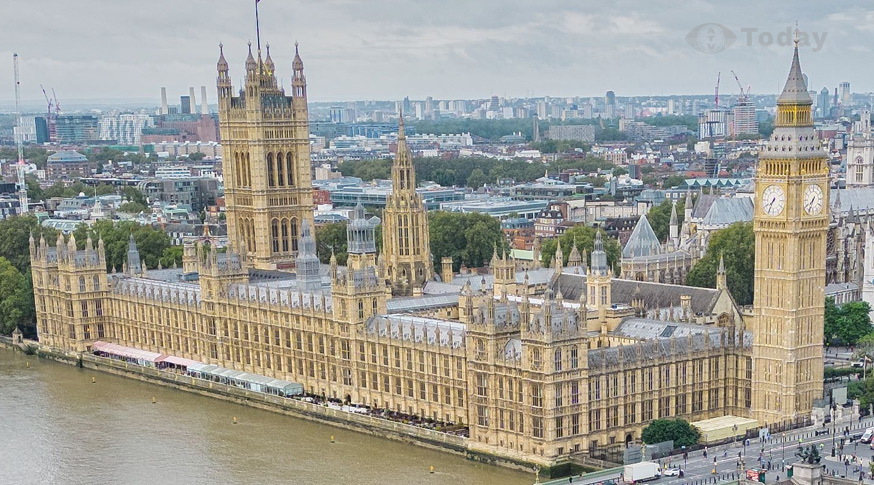
Timeline of major UK media events (2010–2026)
- 2010: Coalition government freezes the BBC licence fee (2010–13) as part of negotiations, committing to the multi-year settlement Simon respected. However, in 2014 the BBC took on World Service funding (a hidden fee “top-slice”).
- 2010: Culture Secretary Jeremy Hunt formally scraps Labour’s local news consortia plan (IFNCs); no new IFNCs launched. Plans for strong regional ITV news continue under government mandate.
- 2011: STV and ITV resolve their dispute privately (STV returns to UK news network). Ofcom begins licensing local TV stations across UK.
- 2012: London hosts the Summer Olympics on schedule; UK commits large sums to sport. Legacy programs (infrastructure, youth sports) expand briefly but face cuts in subsequent years.
- 2014–15: Launch of local TV channels (e.g. “London Live”); by 2015 many struggle or close. Ofcom admits most local TV ventures are unlikely to be commercially viable.
- 2016–17: New BBC Charter: Trust abolished, BBC Board appointed. Licence fee resumes inflationary increases (after 2016). Ofcom monitors PSB compliance.
- 2022: Culture Secretary reverses her predecessor’s policy – Channel 4 will remain public.
- 2023: Digital and Culture Bill passes, codifying Ofcom’s role and expanding Channel 4’s remit (as Simon supported in 2010’s Digital Economy Bill).
As for Sion Simon he left Parliament as an MP later in 2010 becoming a Member of the European Parliament (MEP) for the West Midlands from 2014 to 2019.
One Reply to “Sion Simon’s 2010 Media Forecast: Hits and Misses”
Comments are closed.