
As PopMaster returns to Channel 4, its host talks music, nerves, Motown and the art of the perfect quiz question

After an 18-month break, PopMaster TV is returning to Channel 4 — and for Ken Bruce, getting back into the studio felt remarkably familiar.
“It was lovely to get back into the studio, and the old crew, everybody we’d worked with before, just about, and we just picked up where we left off,” he says.
The television version of the much-loved radio quiz has retained the basic ingredients that have made PopMaster a fixture for music fans, while adding elements that could never work on the radio.
“The beating heart of it is still the Radio PopMaster,” Bruce says. “That’s why I think it is one of the strengths of it.”
Among the additions is Video Gaga, a round which tests contestants on music videos as well as the songs themselves. The series also features the Links round, in which five questions are connected by a common theme, before contestants reach the familiar PopMaster rounds and the three-in-ten finale.
For Bruce, one of the pleasures of hosting the television version is finally being able to see the people he normally encounters only over the telephone.
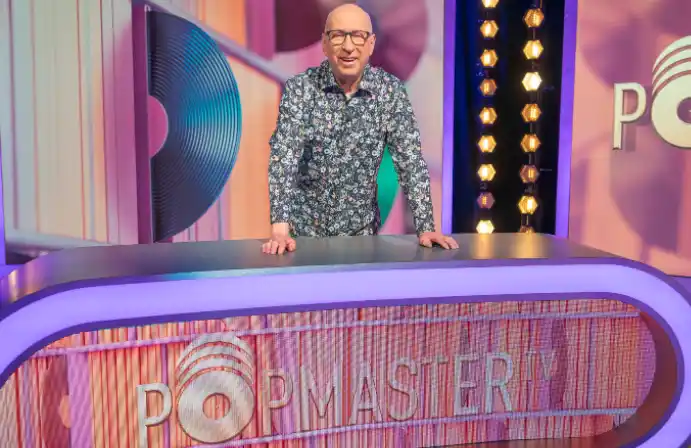
“On the radio, just talking to somebody on the phone, you get a very good idea about people, but it’s an added dimension to see them in the flesh,” he says.
His role, he explains, is partly to make the studio environment disappear for the contestants.
“It’s a strange environment, a television studio. My job is to help them forget that they’re in a TV studio and just think that they’re taking part in a pub quiz.”
That might sound straightforward, but the pressure on the contestants can be considerable. Five people make it through the selection process, having demonstrated both musical knowledge and personality, but Bruce says it is impossible to predict what will happen once the questions start.
“You can see the five contestants and you can think they’re going to do well, and for some reason, they don’t,” he says.
Confidence can also play a major part. A contestant who is thrown by an early question can find their performance unraveling, regardless of how much musical knowledge they actually possess.
Bruce has occasionally tried to predict the eventual winner. “I don’t think I’ve ever once been right,” he admits.
The quiz’s difficulty is part of its appeal. Bruce believes British audiences have little interest in quizzes that are simply too easy.
“We don’t like quizzes that are insultingly easy,” he says, pointing to programmes such as Mastermind and Only Connect as examples of formats that expect contestants to have a substantial breadth of knowledge.
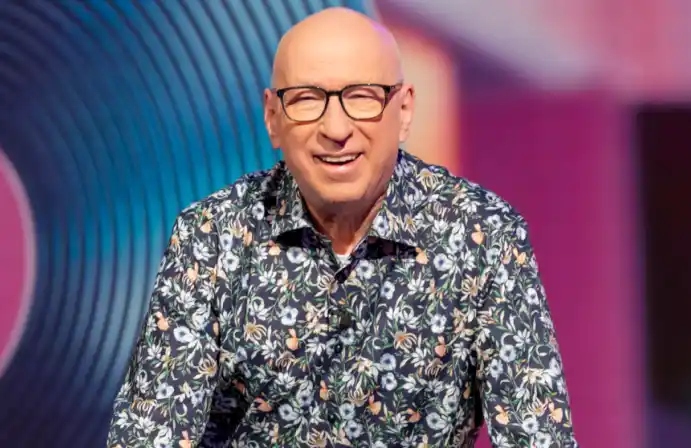
And when it comes to PopMaster, that knowledge can be spectacularly impractical.
“We pride ourselves on collecting useless knowledge and if ever there was useless knowledge, it’s pop music knowledge.”
That willingness to test contestants across generations is central to the format. Bruce says the 1980s tend to be the decade contestants know best, even among people who weren’t alive at the time.
“I think the 80s is the one that people know most about,” he says.
But PopMaster can range from the 1950s through to the 2020s, meaning knowledge of a single era is rarely enough.
For Bruce himself, however, there is one musical subject that would have him feeling particularly confident: Motown.
The broadcaster grew up musically in the 1960s and remains baffled when contestants admit they know little about the Detroit sound.
“I’m always shocked when people get an option of Motown, they say, ‘Oh, no, no, no, I don’t know anything about that’ and I think, how can you not know anything about that?”
“For me, it’s the ideal. It’s the best music of all time.”
Bruce’s own relationship with music also stretches beyond the quiz. Despite acknowledging the convenience of streaming — particularly when he is learning songs for the small band he plays with — he remains attached to physical music.
“Vinyl will always be my favourite,” he says.
Part of the attraction is the experience surrounding the record: the artwork, sleeve notes and the simple pleasure of having something tangible to take from a shelf.
“If you haven’t got those, you are missing an element of any good piece of music,” he says.
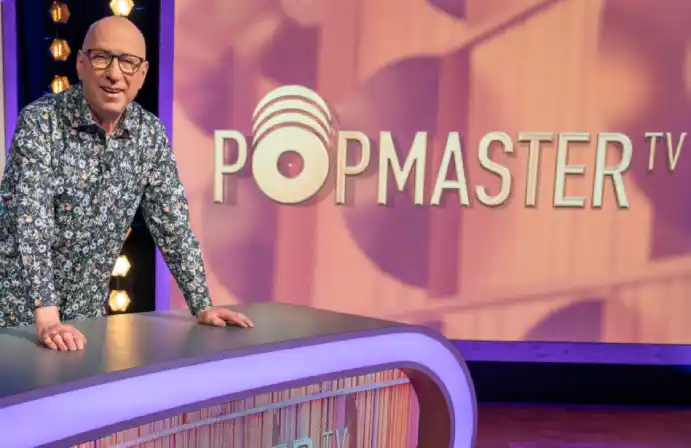
And while the way music is created has changed dramatically, Bruce isn’t convinced the role of the songwriter has disappeared.
He compares today’s songwriting teams with the professional writers of earlier decades, pointing to figures such as Carole King and Neil Sedaka, and even further back to George Gershwin and Cole Porter.
“People still need people who know their way around a song and know what added element will lift it from being a good song into a great song, or a hit song.”
For anyone hoping to take on PopMaster themselves, Bruce’s advice is simple — musical knowledge alone isn’t enough.
“You need an element of both,” he says. “The music knowledge needs to be very strong, but unless you can knock out the answer within five seconds, you’re not going to do well in a quiz.”
That combination of knowledge, speed and nerve is perhaps what keeps PopMaster compelling after so many years. The questions may be about pop music, but success depends on how quickly a contestant can turn a half-remembered song, artist or lyric into the right answer.
And, as Bruce knows better than most, sometimes knowing the answer isn’t quite enough.
PopMaster TV with Ken Bruce, produced by Bright Entertainment, returns to Channel 4 on Monday 17 August 2026.