
Three public murals created by Southwark teenagers through an innovative sound and drawing project will go on display across Bankside, challenging perceptions of art, creativity and career opportunities
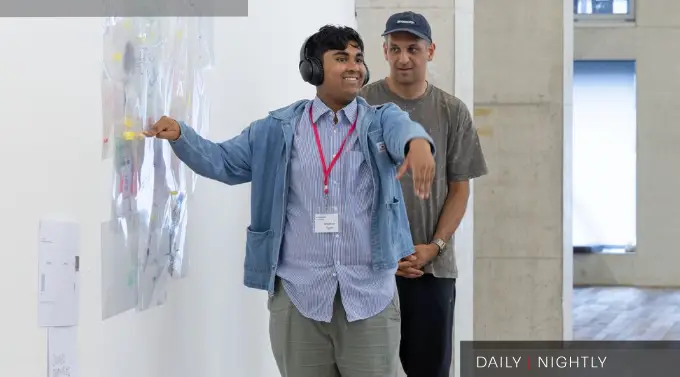
Can art help young people see a different future for themselves? A new creative initiative involving Tate Modern, local artist Abbas Zahedi and 21 teenagers from Southwark is aiming to do just that.
Part of Bankside Futures, a career discovery programme run by Business Improvement District Better Bankside and charity Sculpt, the project brought together young people from under-represented backgrounds to explore the relationship between creativity, confidence and their future working lives.
Usually, Bankside Futures takes participants aged 16–18 into businesses of all sizes across the Bankside area, helping them develop their CVs, build essential skills and experience professional working environments. This summer, however, the programme offered a different kind of opportunity, immersing the group in the creative environment of Tate Modern.
Working alongside London-based artist Abbas Zahedi, the teenagers took part in Sonic Sketches: Bankside Murals, an ambitious project using sound and drawing to challenge assumptions about art and who gets to participate in it.
The three resulting murals, created from the group’s experiences of listening, sound-making and exploring their surroundings, will be displayed at locations across Bankside from 17 November.
Rather than simply providing a creative break from more conventional career activities, the project was designed to encourage participants to think differently about themselves, their ambitions and where they might fit into the future world of work.
Making art accessible
For Zahedi, the opportunity to work with the young people was particularly meaningful. Having grown up in Ladbroke Grove, around Notting Hill Carnival, and attended state schools, he understood the importance of making culture feel accessible rather than exclusive.
His own route into the arts was far from conventional. After initially studying medicine, he developed a career as an artist, demonstrating to the group that there is no single path towards a creative profession.
The experience of meeting an exhibiting artist at Tate Modern who could speak about culture in a way that felt familiar was a highlight for many of the participants.
“As soon as I spoke, the young people kept asking me where I was from. I guess coming from a background like theirs, art was my way into a broader sense of society, rather than accepting a kind of marginal or niche position,” Zahedi explained.
“But landing in the art world I realised that some people, often from more privileged backgrounds, use it in a sense to separate themselves from everyone else. So I wanted them to see art as something public and social, a way of engaging with society as a whole, rather than an enclave of privilege.”
Rachel Nicholson of Better Bankside said the programme was about expanding the young people’s understanding of what might be possible for them.
“Our aim on the Bankside Futures programme is not to suggest specific career paths for the young people. What we want to do is break down the invisible wall of what is, and what isn’t possible when it comes to their futures. It is about expanding their sense of where they might fit and what they can achieve.”
Learning to think like an artist
At the heart of the project was sonic sketching, a technique Zahedi began developing around five years ago in collaboration with Tate’s Learning team.
The workshops encouraged participants to listen, draw and respond physically to sounds simultaneously. Using sound to create a space in which people felt comfortable noticing and sharing their observations, the sessions challenged conventional ideas about what art could be.
Participants were encouraged to translate intangible emotions and thoughts into visual work, explore their individual interpretations and find the confidence to share their ideas with others.
The process also helped develop skills that could be applied well beyond the creative industries, including imaginative thinking, communicating clearly, collaborating and recognising the value of having an individual point of view.
“There is a clear benefit to learning how to think like an artist, without actually needing to become an artist,” said Zahedi. “Art offers us the chance to see things in a more holistic sense, which is good for anything the young people might do.
“That’s partly what sonic sketching is about. In everyday life we take in culture with all our senses at once, sound, image, how something feels in the body, but galleries often wall these off into quite formal, almost academic categories, the visual here, the sound or the video over there.
“I guess sonic sketching tries to put them back together, so the young people could experience art in a way that’s more integrated, closer to how culture actually happens on the street or with friends. And in that sense you get exposed to lots of different thoughts and ideas at once, which encourages a kind of intellectual curiosity, being open to ideas from anywhere.”
Nicholson said it was rewarding to see participants become more comfortable with an environment that some had previously found intimidating.
“The project challenged the young people to think completely differently. They had to work together, and for some, they felt completely out of their comfort zones. It was rewarding to see young people realising they could interact with art and be comfortable in a gallery environment for the first time.”
Challenging the barriers to culture
For some of the teenagers, the project marked their first visit to an art gallery. Their experiences raised wider questions about who feels welcome in cultural spaces and whether opportunities in the arts are equally accessible to everyone.
Zahedi believes those barriers remain significant, particularly for people from working-class backgrounds.
“They hadn’t felt Tate Modern, or galleries, could be somewhere they could have a place, and I think that perception is still very real. It is becoming harder and harder for working-class people to get into the arts,” he said.
Nicholson added that young people should never feel that certain places or professions are beyond their reach.
“No young person should feel certain spaces in society are closed to them – it is the same reason we take them into a 5* hotel and into polished offices, so they realise they have a right to be in those places too.”
Nicole Gordon, CEO of Better Bankside, said the project had helped address some of the limiting beliefs participants held about their futures.
“The incorporation of Sonic Sketches into the Bankside Futures programme this year was a huge success in terms of helping get to the core of the limiting beliefs many of the young people held about their futures.
“Art may seem completely unconnected to the world of work, but it can reach our assumptions and emotions very efficiently, and these are often what drive the decisions about our lives.
“In the same way, public art in Bankside has a surprising benefit to our business community. You may think noticing a mural has very little to do with your day, but it is in these punctuations of creativity and difference that we are refreshed and motivated.”
Rachel Noel, Head of Learning at Tate, also highlighted the importance of listening, understanding and creative expression for young people growing up in a rapidly changing world.
“Young people are growing up in a world of rapid change, and understanding themselves, listening to each other and making sense of differences are essential skills for the future. Through sonic sketching with Abbas, young people were invited to explore what matters to them and think about who they want to be, through sound and image making.
“We are delighted to be a part of the Bankside Futures programme. We hope the three murals will be a lasting reminder of what these young people achieved together, and an invitation to everyone who sees them to think again about how they relate to each other, to culture and to the environment.”
The three Bankside murals
The finished artworks have been painted by London-based artist Darren John and his team at Absolutely Studio. Each reflects a different element of the young people’s experiences during the project.
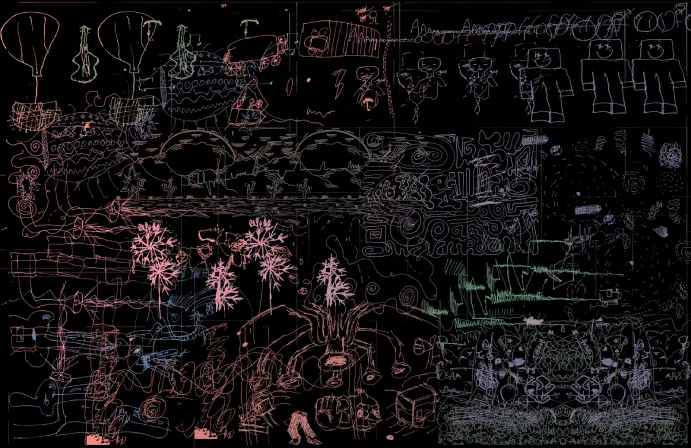
1. Union Street – Begin Again
Inspired by Zahedi’s Begin Again installation at Tate Modern, this mural brings together individual drawings made after participants experienced the installation’s unusual soundscape.
On display at Tate Modern until 7 March 2027, Begin Again uses instruments and playback devices connected to the gallery’s utility pipes and deeper architecture to create a sound composition exploring harmony and disintegration.
After spending time listening to the installation, the young people produced individual drawings which were brought together in a collaborative collage.
Zahedi described the underlying theme as: “Grief is powerful; it evidences our fundamental reliance on one another and our need for connection.”
One Bankside Futures participant reflected: “I believe that as a group we are more talented and skilled. We all have the ability to think, communicate, work together, and take in ideas from our friends.”
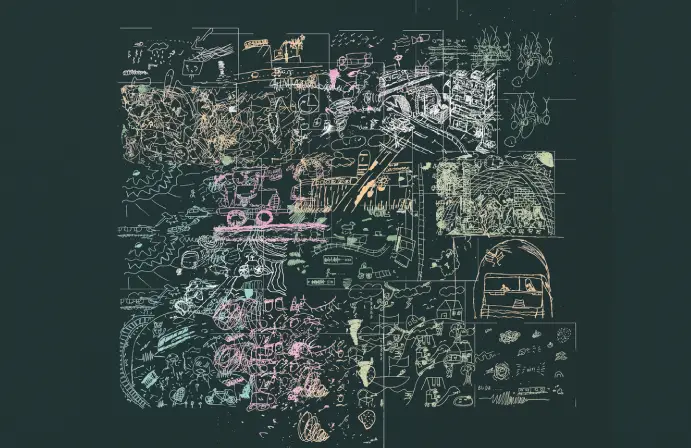
2. America Street – Field Recordings
For this mural, participants explored the Bankside neighbourhood, making field recordings of the sounds they encountered along the way.
Zahedi edited the recordings into a soundscape which was played during a session at Tate Modern. The artwork brings together the young people’s individual visual responses to what they heard.
One participant commented: “It is easy to capture meaningful ideas when … focusing only on what’s around us at this current moment.”
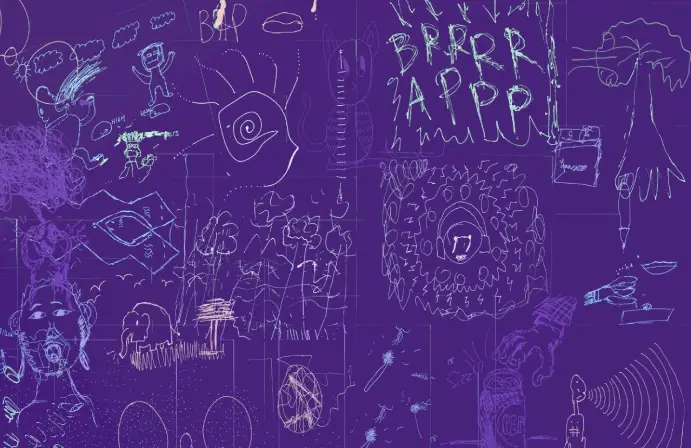
3. Surrey Row – Sound Making
During their visit to Tate Modern, the group took part in a collaborative call-and-response activity in the Begin Again installation, drawing and vocalising sounds together.
The resulting mural combines visual representations of the individual sounds the young people spoke, shouted and sang back to one another in the gallery.
Reflecting on the experience, one participant said: “The project made me realise the importance of art. The flow state of mind people have to be in. Taking in the environment around them and producing something with such great meaning.”
The three murals offer a lasting record of the young people’s collaboration, but the ambition behind Sonic Sketches reaches further than the finished artworks. By giving teenagers the chance to explore creativity, challenge their assumptions and feel at home in a major cultural institution, the project aims to leave them with a broader sense of what they can achieve.
Find out more about the project and how the young people worked with Abbas Zahedi at Tate’s Sonic Sketches: Bankside project page.