
It’s 100 years this week since writer, producer and director Reg Watson was born. In the second of a special series of features we celebrate one of television’s greats…

ATV Network for ITV 1955–1964
He arrived in Britain for a three-month holiday. Nineteen years later, Reg Watson was still there — having helped create thousands of hours of television along the way.
When Reg Watson arrived in Great Britain in 1955, he was supposed to stay for just three months.
He ended up staying for nineteen years. More importantly, he had secured the job he had dreamed about.
Reg was initially employed as a writer by ATV (Associated Television), which had been granted the franchise to broadcast to the London region at weekends. Weekday programming was supplied by a separate company, Associated-Rediffusion.
ATV was an organisation with an impressive theatrical pedigree. It was headed by the legendary theatrical impresarios Lew Grade, Prince Littler and Val Parnell.
Reg quickly began to rise through the ranks.
Writer.
Director.
Producer.
Creator of new and original programmes.
He would become one of the organisation’s linchpins and, on occasion, even found himself presenting the news.
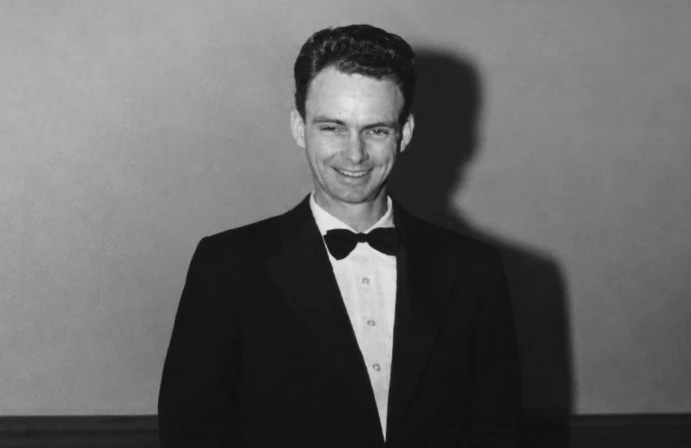
ITV’s Grand Arrival
ITV’s opening night was a suitably hectic affair. A co-production between ATV and Associated-Rediffusion which saw staff from both companies pulling together to get UK commercial television on air.
Throughout the broadcast, Reg was positioned underneath the desk of announcer Bob Danvers-Walker, furiously writing last-minute promotional links and announcements.
This was live television in its rawest form.
Production assistants would telephone through instructions telling the team how many seconds or minutes a programme was running over or under schedule.
Reg’s job was to react instantly. If a programme had overrun, he would write something to cut. If the schedule was running short, he would produce something to fill the gap.
There was no luxury of recording something again later. The programme was on air. The clock was ticking. And Reg had to make it work.
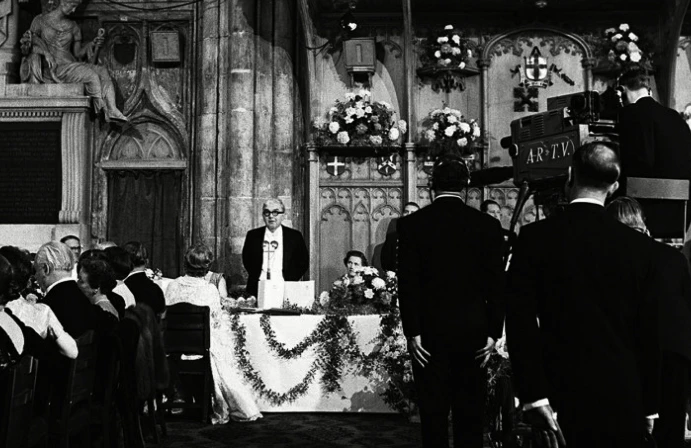
Birmingham becomes the next great chapter
In 1956, things took a new direction, northwards.
Commercial television was about to begin transmission in the Midlands, with the launch scheduled for 17 February 1956.
ATV was awarded the weekday franchise, while other ITV company ABC (Associated British Corporation) would provide the weekend programming.
The broadcasters had only four months’ warning before launch. There was no time to construct new television studios, so a former cinema in Birmingham was converted for the purpose. Both franchise holders would share the newly created Alpha Studios.
A number of ATV London staff were selected to relocate to Birmingham.
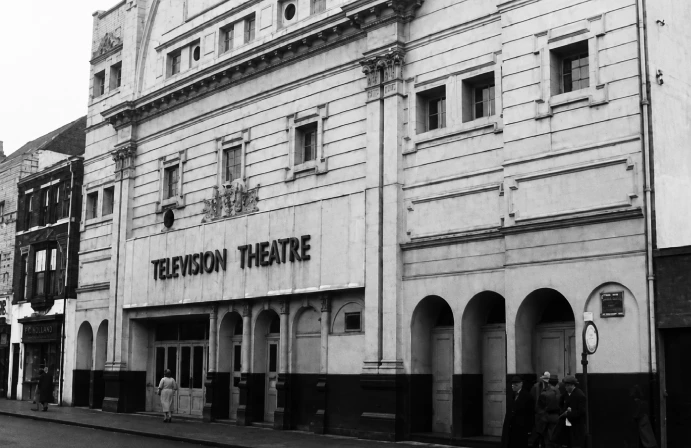
Reg was appointed Head of Light Entertainment, while actress and presenter Noele Gordon became Head of Lifestyle and Ned Sherrin was Head of Factual and Current Affairs.
For Reg and Noele, they would primarily be based in Birmingham but continued travelling back to London for various productions.
And Reg’s first day at Alpha Studios was typically Reg Watson.
He arrived to find himself standing in for a test transmission — despite having three regular productions to establish and produce, all of which were due to go to air the following week.
It was a sign of things to come. Reg was about to enter one of the most extraordinary periods of his career.
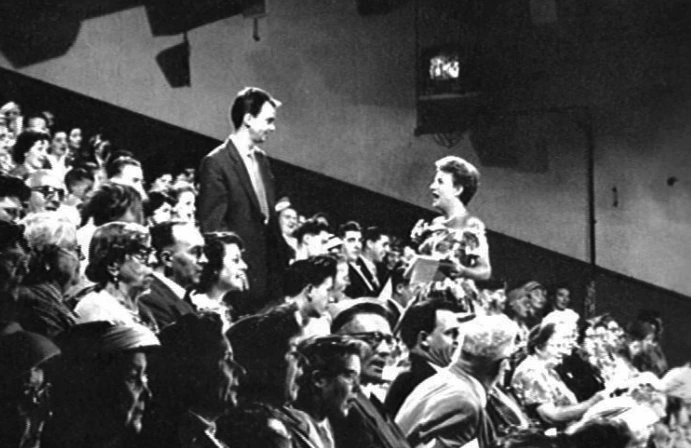
“They had a spare slot and I filled it.”
During his time with ATV, Reg would produce more than 4,000 television programmes.
He worked across virtually every genre imaginable — light entertainment, music, children’s programmes, sport, farming, interviews, fashion, drama, gardening and topical discussion.
As Reg himself put it:
“In those wild and very hectic days ATV would just say they had a spare slot and I filled it.”
And fill them he did.
One of his early successes was Fancy That!, which ran from 1956 until 1961.
Devised and directed by Reg and hosted and produced by Noele Gordon, the fifteen-minute programme was a guide for the smart shopper, showcasing and reviewing consumer products.
Then there was Musical Cheers, a forty-five-minute Saturday afternoon programme concentrating on stars from musicals and major theatrical productions.
Reg produced and directed the series, with Noele Gordon as host and the Jerry Allen Trio as the resident band.
He was also producing and directing episodes of Val Parnell’s Saturday Spectacular, which devoted each edition to a major musical or comedy star and their special guests.
The resident orchestra was led by Jack Parnell, Val’s nephew and ATV’s Musical Director.
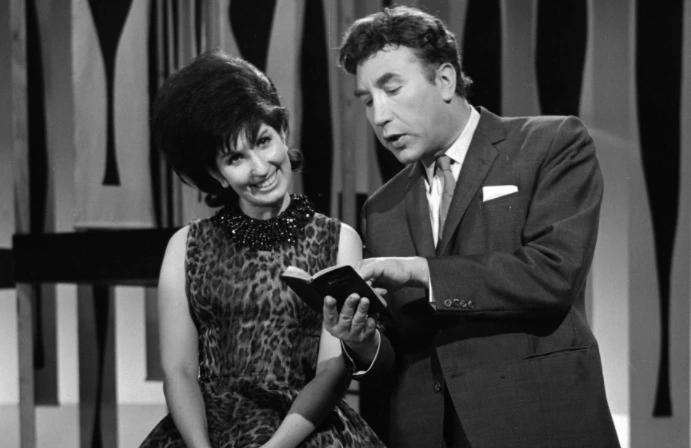
Among the stars Reg worked with were Frankie Vaughan, Pat Kirkwood, Eric Sykes and Michael Bentine.
The format was successful enough to generate a Tuesday night version, Val Parnell’s Spectacular, in 1958, as well as Val Parnell’s Startime, which aired on Thursday evenings.
For Reg, the workload was already enormous. But the biggest success was still to come.
The programme that changed British daytime television
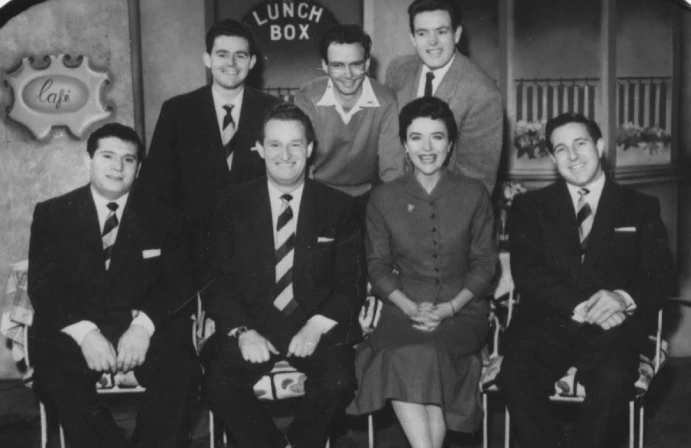
In 1956, Reg, with the input of Noele, created Lunch Box. It would become a television phenomenon.
The programme was Britain’s very first long running daytime television show, and Reg produced, wrote and directed the live hour-long programme five days a week.
It generated an extraordinary response — as many as 20,000 letters a month from viewers. The concept was deceptively simple.
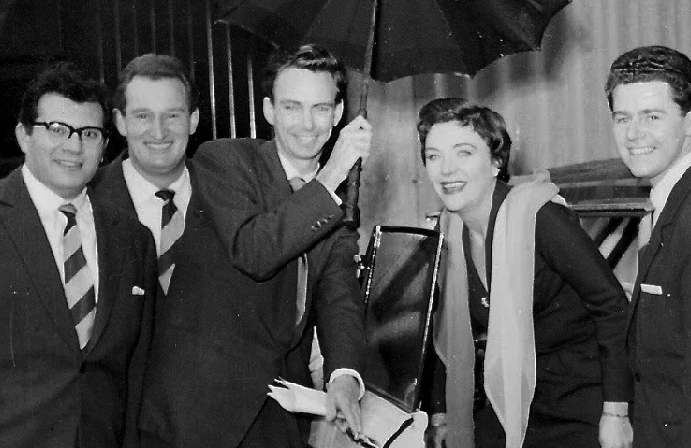
Noele Gordon would read viewers’ messages, interview celebrity guests and join the Jerry Allen Trio for an old-fashioned sing-song.
The trio consisted of Lionel Rubin on drums, Alan Graham on vibraphone and Ken Ingarfield on double bass. Canadian-born singer David Galbraith was another regular contributor.
ATV promoted the programme as something that would add “gaiety and spice to the luncheon menu.” It certainly did.
27,000 viewers make their presence felt
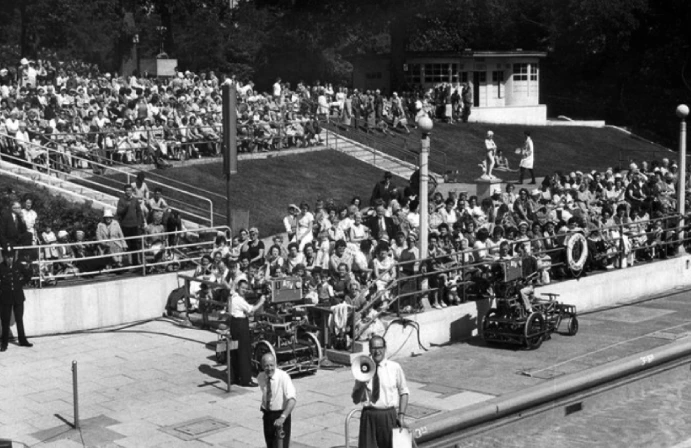
Reg occasionally took Lunch Box outside the studio. One particular outside broadcast was planned at Nottingham Forest Football Club.
The production team expected around 1,000 people. Instead, 27,000 eager fans turned up. The crowd spilled across the football pitch and caused gridlock on the surrounding roads.
Even Lew Grade and Val Parnell were astonished.
Reg later recalled Grade’s original scepticism about the programme. The concept had seemed almost ridiculously simple: a lunchtime show with a camera pointed at a bunch of flowers, Jerry Allen providing background music and Noele Gordon reading viewers’ “cheerio” calls.
Lew Grade had been convinced that busy housewives would not watch television at lunchtime. He was wrong. Very wrong.
Lunch Box was an instant hit.
Its popularity was demonstrated again in 1959 when Associated-Rediffusion in London and Scottish Television dropped the programme from their schedules. Viewers were furious.
Both broadcasters were flooded with complaints, although neither reversed the decision.
The programme was still rating strongly, but broadcasters were restricted to transmitting fifty hours of programming each week. The two ITV regions believed viewers would be better served by extending their evening schedules.
For Reg, however, the lunchtime experiment had already proved the point. People would watch television during the day.
Real life, fantasy and the unusual
Reg’s interests extended well beyond conventional light entertainment. He produced and directed The Storyteller, which ran from 1956 until 1961.
The format changed over the years, but the central idea remained the same: a guest would tell a “new and unusual tale to surprise and entertain.”
Some stories were genuine recollections. Others were completely fictional.
Guests included lawyer and art historian Professor Thomas Bodkin, a pathologist sharing experiences from his profession, and playwright and author Evadne Price, who told stories of the unusual and recalled her experiences as a war correspondent during the Second World War.
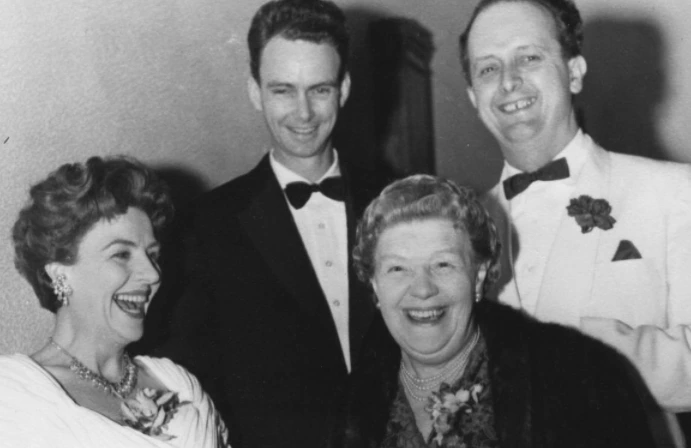
Reg actually discovered Evadne Price at a cocktail party in London. She told him a ghost story. It scared the hell out of him.
But Reg immediately recognised her potential as a television storyteller. He brought her to ATV, where she went on to make quite a name for herself.

Bullseye wasn’t ATV’s first dart based game show, back on February 20th 1956 the broadcaster launched Hit The Limit. Reg, once again, oversaw production of the show. It was first seen only in the Midlands region of ITV before later being networked.
It was a major hit for the early commercial network with a 60% audience share in the Midlands when it launched – making it the most popular show on ATV at the time. Despite its success, only three series were made with the first hosted by Pete Murray, followed by Jerry Desmonde and later Leslie Sands.
It was also quite a unique format in the game show genre with the series both featuring studio and on-location footage including the canteen of Imperial Chemicals. Contestants would answer questions in return for cash prizes while the dartboard varied the amount won.
Reg Watson becomes the man behind the ITV festive schedule
Reg was also becoming increasingly associated with ATV’s Christmas programme offerings.
In 1956 he produced and directed ATV’s first Christmas special for the Midlands. The two-hour extravaganza featured some of the biggest acts of the day and was designed to give viewers a “bright stay at home Christmas.”
The timing was significant.
Government-imposed petrol rationing, introduced as a result of the Suez Crisis, meant that staying home was very much on the agenda.
The programme was successful enough for Reg to produce and direct the Christmas Day offering again the following year.
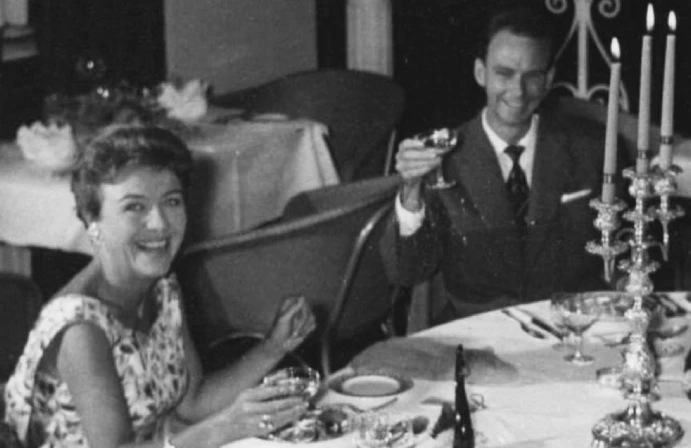
Christmas Box, broadcast in 1957, featured the Lunch Box team headed by Noele Gordon.
The cast included Jerry Allen, Lionel Rubin, Alan Grahame, Ken Ingarfield, Sheila Buxton and Terry Burton. In a pre-recorded sequence, Noele visited the Leicestershire Regiment who were stationed in Cyprus.
The festive editions became something of a tradition.
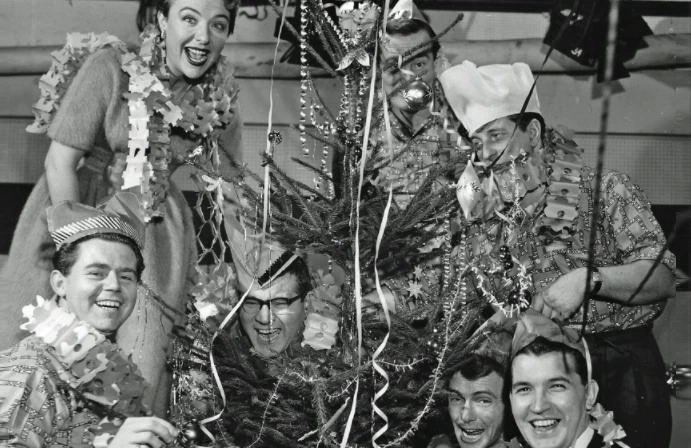
In 1958 came The Christmas Tree, broadcast on Christmas Eve, with Noele and the Lunch Box cast decorating their tree and singing carols.
Christmas Day brought another Christmas Box, featuring celebrity guests alongside the regular gang.
Among them were The Concords, The MacTweedles, Pat Barnes, Dulcie Sawyer, Jean Morton and Australian singer Eula Parker.
Children were even taken to Toyland to meet the Wicked Witch and the Fairy Queen. Reg’s Christmas television was becoming an institution.
There was almost no genre Reg wouldn’t tackle
Reg’s ATV portfolio continued to expand.
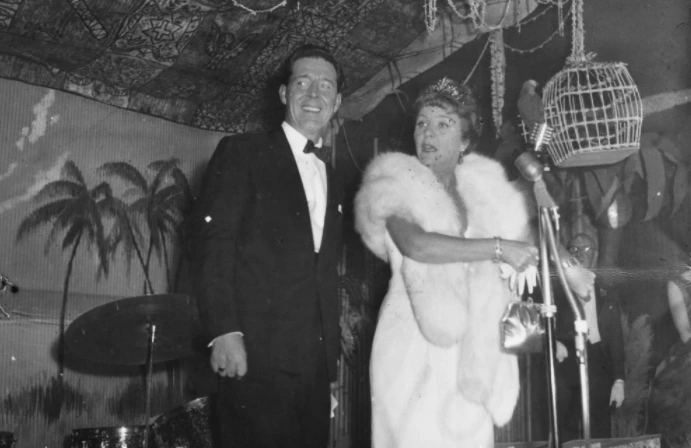
He devised, produced and directed Rainbow Room, a nightclub-style programme showcasing more serious jazz music.
Hosted by Jean Morton or Pat Astley, with Jerry Allen and his Trio as the resident band, the programme featured musicians from across the Midlands club scene. Sheila Buxton appeared as a semi-resident vocalist.
Reg also worked on storylines for Emergency Ward 10, the hugely popular drama series following the lives and loves of the staff at Oxbridge General Hospital.
And then there was farming.
Reg produced and directed numerous editions of Midland Farming, a fifteen-minute late-evening programme examining modern agricultural methods.
The show was filmed largely on location, with commentary added live in the studio. The production travelled extensively, taking Reg and his crew across Europe in the days before the Common Market.
In 1962, Midland Farming travelled to West Germany to examine the impact of the Common Market on farming.
The crew visited a government-supported village cooperative near the Soviet Zone and a horticultural settlement south of Wiesbaden.
Then, after this major European expedition, the team returned home to interview world champion sheep shearer Godfrey Bowen, who had sheared 463 sheep during a nine-hour day in 1961.
For Reg, television was never simply about sitting in a studio. If there was a story somewhere else, he went there.
Noele Gordon Takes the Air
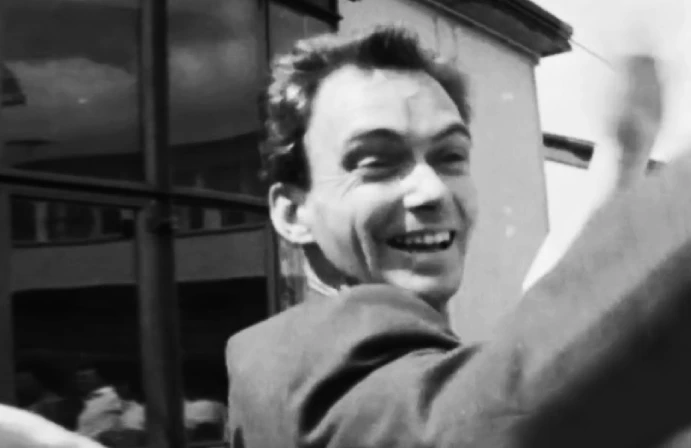
A regular feature of Lunch Box saw Noele Gordon “having a go” at adventurous activities. She trained with the fire brigade. She went down a mine. Rode a camel, a steam train, interviewed a lion live in the studio – which then escaped and went for a browse down Aston Cross high street, climbed inside a circus cannon and would happily have been shot out of it – but even back then ATV’s health and safety ruled that out.
And then Reg, after all this mirth, turned the segment into a six-part spin-off series.
Noele Gordon Takes the Air was recorded on location in 1958 and produced and directed by Reg.
Viewers watched as Noele learnt to fly an Auster light aircraft. As the newest member of the Warwickshire Aero Club, she received instruction from Neville Birch and Arthur Penzer.
It was a challenging production.
Mid-air sequences sometimes had to be filmed repeatedly to obtain the required angles, while the resulting material demanded substantial editing.
The effort paid off. The series was a ratings smash. And in the final instalment, Noele Gordon received her pilot’s licence.
The Stars of the Midlands: From local personalities to international names
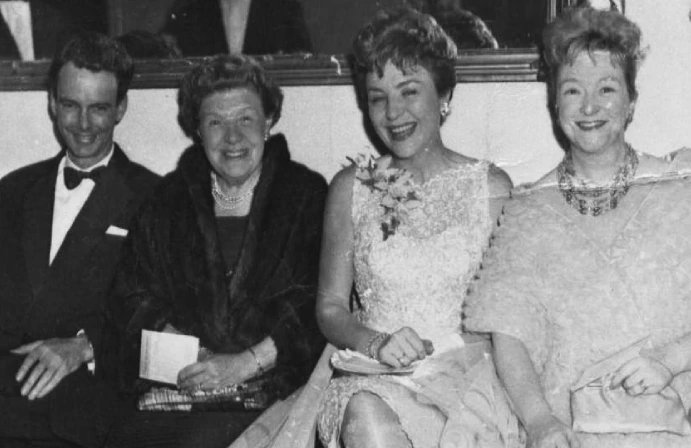
Reg also produced and directed numerous editions of Midland Profile, a one-on-one interview programme in which presenters including Ivor Jay met major personalities from the region.
The idea was to discover how — or sometimes whether — their guests had achieved fame and fortune. The range of contributors was extraordinary.
The 9th Earl of Lanesborough discussed his passion for trains and model railways. Rose expert Harry Wheatcroft talked about the 500,000 blooms he produced every year.
Ida Wench, one of the first white women to work among the head-hunters and cannibals of the islands of Melanesia, spoke about her 27-year battle against witchcraft.
Other guests included writer Godfrey Winn, singer Cleo Laine, Birmingham’s Chief Constable E.J. Dodd CBE, model Valerie Eden, politician Jennie Lee, film star Anne Heywood, actor John Rollason and novelist Ursula Bloom.
There was seemingly no subject too unusual and no personality too unexpected for Reg’s television.
5 Years of ATV Midlands: A spectacular celebration
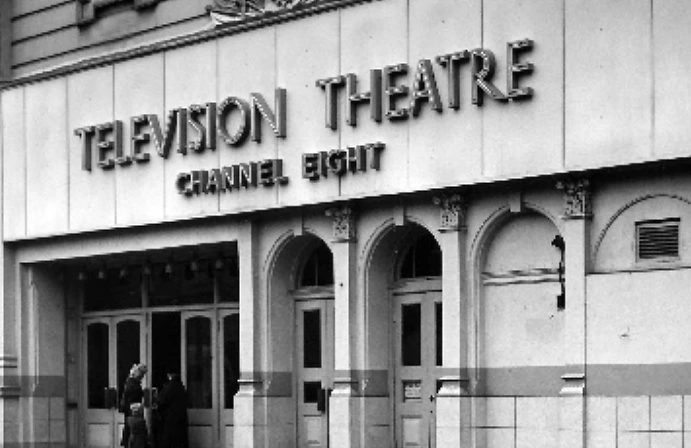
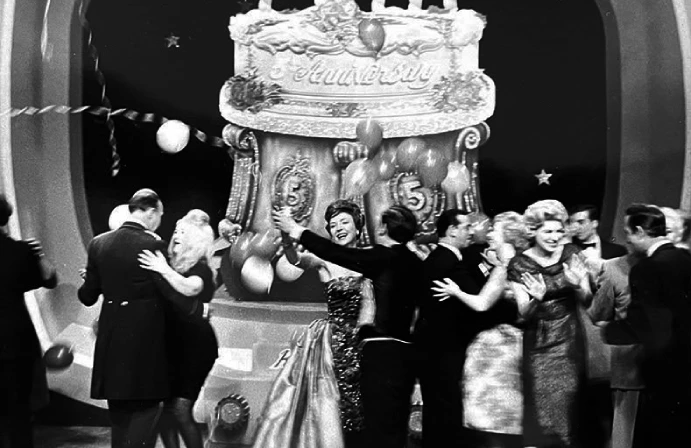
On 17 February 1961, ATV celebrated five years of broadcasting to the Midlands. More than 21,000 individual programmes had been produced, and the ratings had soared.
As ATV’s most senior producer in the Midlands, Reg was chosen to produce and direct a spectacular gala celebration.
It was called ATV’s Fifth Anniversary Show
Executive producer Val Parnell had arranged for virtually every major comic act in Britain to appear, while in-house head of design Rex Spencer created, with his team, an impressive set especially for the occasion.
Noele Gordon hosted the evening. Jerry Allen and his special Anniversary Orchestra provided the music, with the George Carden Dancers adding to the spectacle.
The line-up included Morecambe and Wise, Jimmy Jewel, Beryl Reid, Alfie Bass, Bill Fraser, Pat Astley, Patricia Cox, Jean Morton, Eula Parker, Evadne Price and The Ponytones.
Val Parnell was also Managing Director of the Moss Empires theatre circuit, which included the legendary London Palladium.
He was accustomed to securing the biggest stars in the world — and he pulled out all the stops for ATV’s fifth birthday. For Reg, it was another enormous production to add to an already astonishing workload.
Tingha and Tucker are born
One of Reg’s most enduring creations came about almost by accident. Jean Morton – ATV’s first specifically hired female continuity announcer – often introduced the programmes in-vision of an evening.
Just before a live link, a technician jokingly placed two toy koalas on her shoulders. They had originally been given to him as presents for his twin babies.
Reg immediately saw something more. He gave the koalas Australian names: Tingha and Tucker.
“Tingha” was an Aboriginal word meaning “flat”. “Tucker” is something you may still hear in Aussie productions today as a term for ‘food’.
After the characters appeared in a couple of continuity slots, Reg decided they deserved a series of their own.
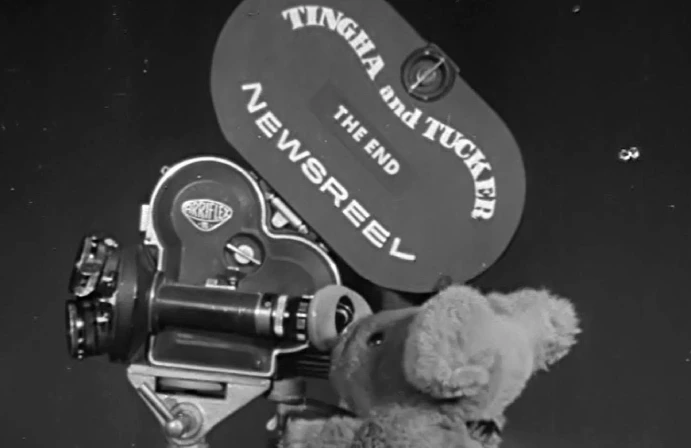
Thus was born The Tinga and Tucker Club. Proper koala puppets were constructed, while a whole Australian menagerie joined them — Willie Wombat, Katie Kookaburra, Ki Ki the Kangaroo, Porky Possum and Ermintrude Emu.
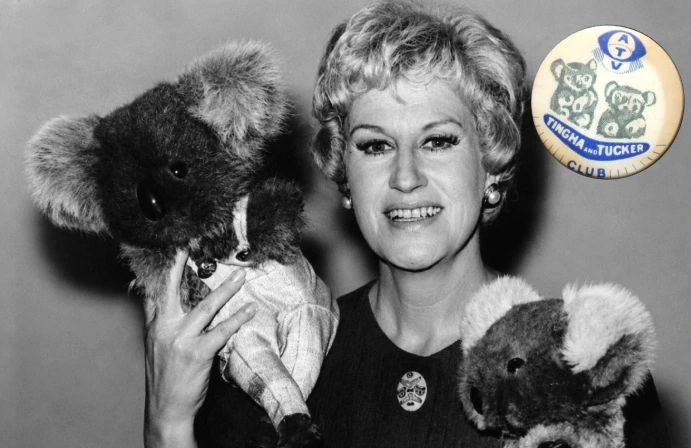
Auntie Jean would tell stories about Pinocchio, the Wizard of Oz and other familiar characters while rubbing her magic boomerang. Reg occasionally stepped in to direct episodes from time to time.
The programme became enormously popular.
Its fan club eventually attracted more than 800,000 registered members — so many that ATV’s studio staff simply could not cope with the volume of mail and were forced to disband it. In the sixties it proved to be ITV’s most popular programme for young children.
When Jean Morton opened Twycross Zoo in 1963, more than 9,000 children turned up to meet her. The merchandising was extensive.
There were Tingha and Tucker slippers, annuals and vinyl records, including the show’s theme tune, Woomerang Boomerang, composed by Tony Hatch.
The characters had become so popular that Tingha and Tucker were even enrolled into the 183rd Birmingham Boy Scout Group.
For Teenagers Only
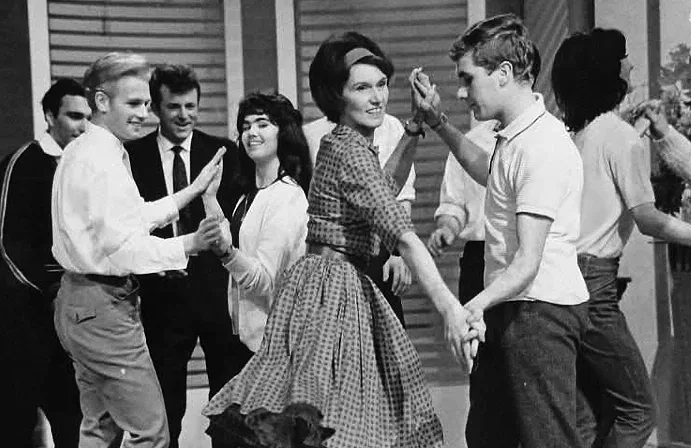
By the early 1960s, Reg was increasingly interested in reaching younger audiences. He devised For Teenagers Only, a pop music series with a difference.
The programme featured major recording stars and groups topping the charts — but that was only half the idea.
Reg also wanted to give unknown local performers a chance. There were around 500 beat clubs in Birmingham at the time, so he knew the audience was there.
The programme was performed before a live studio audience, and viewers could write in to request tickets. The mailroom was quickly swamped. The host was just 15 years old.
Local singer Mair Davies, who would later change her name to Keeley Ford, presented the programme alongside resident groups Steve Brett and the Mavericks and The Senoritas.
And the talent that passed through the studio was remarkable.
The list included The Rockin’ Berries, The Applejacks, The Swinging Blue Jeans, The Dave Clark Five, Billy Fury, Peter and Gordon, The Animals, The Merseybeats, Lulu and the Luvvers, The Spencer Davis Group, Elkie Brooks, The Kinks, Marianne Faithfull and Georgie Fame.
Some were already household names. Others were virtually unknown. Reg gave them all the same thing: a television audience.
Fourteen productions a week
By this point, the scale of Reg Watson’s workload at ATV Birmingham was extraordinary. He could be producing and directing up to fourteen programmes a week.
Lunch Box at lunchtime. Children’s programmes in the afternoon. The 6pm ATV Midland News. A late-night production such as Rainbow Room at 10pm.
And then there was the next day’s schedule to prepare. This was live television in an era when technology was still developing rapidly, and mistakes could not simply be edited out and fixed later.
Reg was not only producing programmes. He was helping train the next generation of television producers and directors.
Sir Lew Grade recognised that the old system of recruiting television directors directly from the theatre would eventually become impractical.
Television technology was advancing. The industry needed people trained specifically for television.
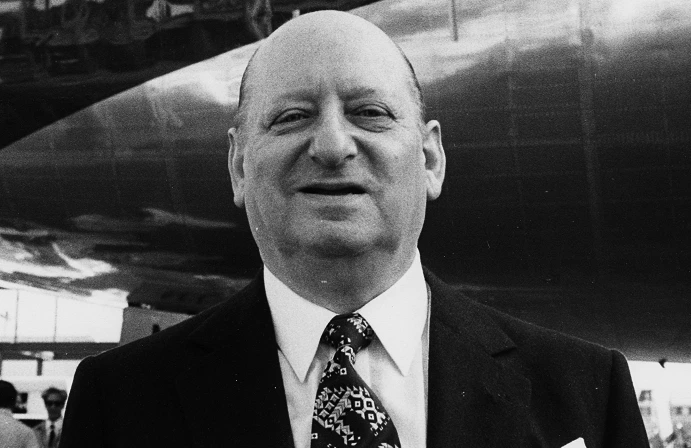
So Grade established a new Trainee Director’s Scheme. Two young cameramen, Alan Coleman and Tim Jones, were among its first successful applicants.
Alan worked primarily with Reg, while Tim was assigned mainly to producer John Pullen.
Under their guidance, both trainees graduated with flying colours and went on to become successful producers and directors in their own right.
Reg’s relationship with Alan Coleman went even further. He eventually became godfather to Alan and Barbara Coleman’s younger son, Nicholas.
By now, Reg Watson was no longer simply the Australian who had arrived in Britain for a holiday. He was one of the people helping to shape the future of British television. And there was still much more to come.
With thanks to Reg Watson/Darren Gray, ATV Network archive, Noele Gordon Archive Collection, Alan Coleman archive, Bryan Downes collection and The National Film and Sound Archive of Australia.
2 Replies to “Reg Watson: The Australian who helped build ITV”
Comments are closed.