
It’s 100 years this week since writer, producer and director Reg Watson was born. In a special series of features, we continue to celebrate one of television’s greats…

The first long-running Grundy serial proved the formula could work, just like it had for Reg in the UK. Then came a generation-defining teenage drama — and, eventually, formats that would become television institutions around the world.
By 1976, Reg Watson was beginning to prove that his return to Australia had been about much more than coming home.
He and the Grundy Organisation were building something new.
The aim was ambitious: develop original Australian drama that could be produced quickly, efficiently and continuously — and create serials that audiences would want to return to day after day.
The first major breakthrough was about to arrive.
The Young Doctors: A 6pm gamble
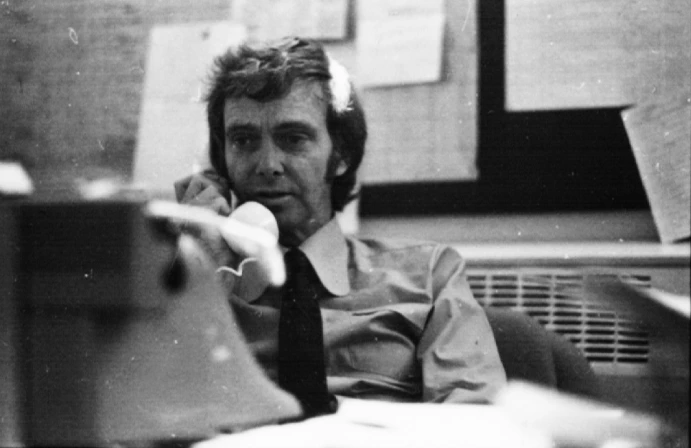
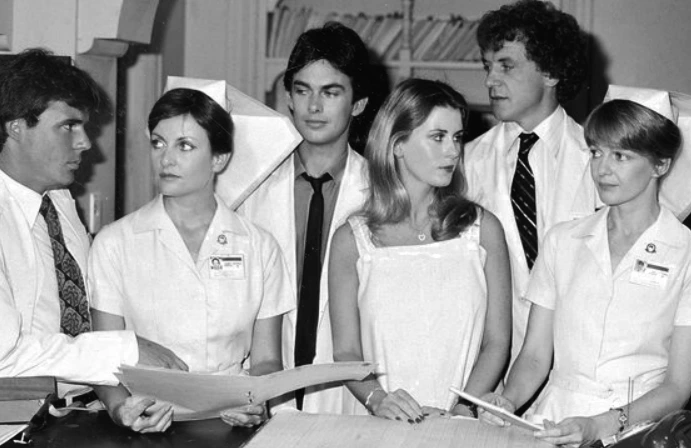
In 1976, the Nine Network approached the Grundy Organisation about making a new television serial called The Young Doctors. Reg wrote the script.
The network liked what it saw and gave the series the go-ahead without even requesting a pilot, although a 50 minute ‘pilot’ was created to give the audiences a taste of what was to follow.
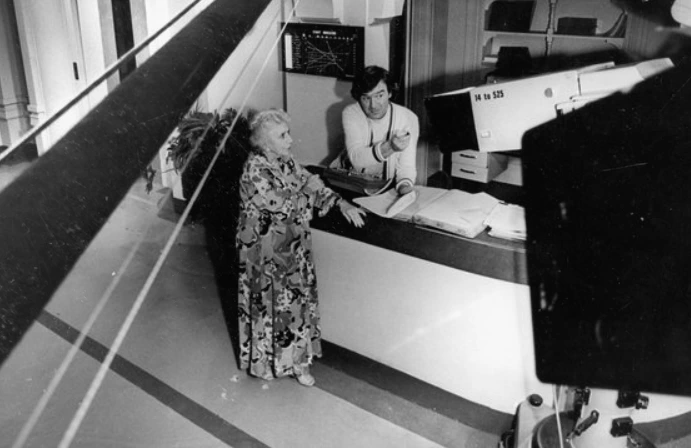
The setting was the fictional Albert Memorial Hospital. Although medical issues would feature in the storylines, the hospital was really a backdrop for something much more important — the relationships between the staff and patients.
Reg became executive producer, while Alan Coleman was appointed producer. A highly experienced production team was assembled.
Director Max Varnel brought extensive experience from feature films and television drama in Britain and Australia, having worked with organisations including the BBC, ABC Television in England and the Danziger Brothers.
Then came Betty Quin, another familiar face from Reg’s British days. She had worked at ATV in England as a writer and producer and now joined the Grundy team in Australia. Everything was in place. But there was one rather large problem. The programme was going to be broadcast at 6pm.
Nobody expected The Young Doctors to survive
Five nights a week. 6pm. It was what the television industry regarded as the graveyard slot.
To make matters worse, The Young Doctors launched during the non-ratings period, meaning there was no official survey immediately available to establish whether audiences were actually watching.
The critics certainly weren’t impressed. From the outset, they panned the programme. One particularly dismissive assessment described it as “the dregs.” The Nine Network soon announced that the programme was going to be axed.
It looked as though Reg’s latest serial had barely got off the ground before it was going to disappear. Then something extraordinary happened. The advertisers had commissioned a private survey of their own. And their results told a very different story.
The Young Doctors was the highest-rating programme in Australia. The network changed its mind. The programme stayed. And it went on to become the highest-rating programme ever broadcast in the 6pm timeslot.
A cast that connected with Australia
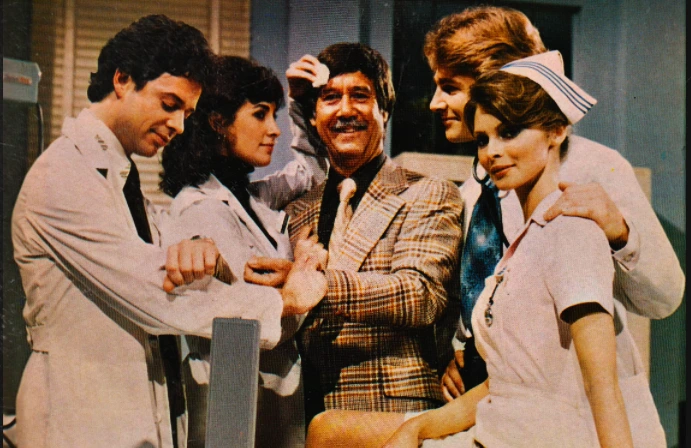
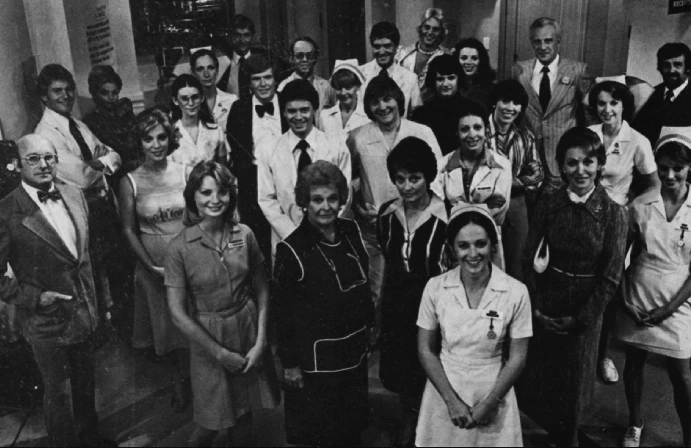
Part of the programme’s strength was its combination of experienced performers and younger cast members. Established actors including Gwen Plumb, Alfred Sandor, Lyn James and Tim Page provided a solid foundation for the serial.
The younger performers brought a different energy. And some quickly became stars in their own right.
Delvene Delaney, who played the good-time-girl nurse Jo Jo Adams, became a pin-up favourite.
Meanwhile Mark Holden, who played Dr Greg Mason, won the 1977 Logie Award for Most Popular Teenage Personality. The programme had found its audience. And that audience wasn’t going anywhere.
The production would ultimately become the longest-running drama serial in Australian television history for many years.
The Grundy formula leaves home
The Young Doctors achieved another important milestone. It became the first Grundy soap to be sold internationally. The series was seen in numerous territories, including New Zealand and France. When ITV in Britain acquired the programme, it was promoted as: “From the creator of Crossroads.”
For Reg Watson, it was a particularly satisfying description. The Australian television industry was no longer simply importing successful overseas formats. It was beginning to export its own.
And The Young Doctors was the first big example. The programme developed a loyal following that continued long after its original run. Years later, Nine Network executives would even admit to Reg Grundy that dropping the programme had been a mistake.
All these years later they still have been unable to find another serialised drama capable of replicating its success.
King’s Men and Case for the Defence
While The Young Doctors was finding its audience, Reg was also executive producer on two other series commissioned by the Nine Network. Both had been devised by Ron McLean, but they couldn’t have been more different.
King’s Men was an action-packed drama about young police officers working undercover in the seedy Kings Cross district of Sydney. It offered audiences a very different view of the city and its criminal underworld.
Then there was Case for the Defence. Starring John Hamblin as a defence lawyer, the series revolved around baffling and challenging cases.
It was notable for another reason. The format was Australia’s first ninety-minute television drama series.
The programme was also sold to ITV in Britain.
Reg was becoming involved in an increasingly diverse range of television drama — and the Grundy Organisation was demonstrating that it could handle far more than soap operas.
A serial for a new generation
In 1977, the Ten Network commissioned another of Reg’s creations. The Restless Years would run from 1977 until 1981. This time, Reg wanted to concentrate squarely on young people.
The series followed teenagers as they left school and began making their way into adulthood. It was scheduled as a one-hour programme twice a week at 7.30pm.
Rather than simply surrounding young characters with established adult stars, Reg wanted the programme to discover and develop new teenage talent. There was one important exception. Veteran performer June Salter appeared as former teacher Miss McKenzie.
But the emphasis remained firmly on the younger generation. The response was immediate. The first episode achieved a rating of 32. The second climbed to 36. Those were remarkable figures. The programme had found its audience almost immediately.
In 1980, an American version of the series was developed. A pilot called Starting Out was produced for KTLA in Los Angeles. It did not result in a series. But the format itself had proved far more durable.
Broadcasters around the world began adapting it. Initially, they would take the original scripts and modify them to suit their own countries and audiences. Then they began developing completely original storylines.
In 1990, Reg Watson found himself in the Netherlands, helping establish a local version for RTL4. It was called Goede Tijden, Slechte Tijden — Good Times, Bad Times. Set in the fictional town of Meerdijk, it became the first daily serial produced in the Netherlands. It was still in production decades later.
The format that Reg had originally developed for Australian teenagers had evolved into a continuing television institution. Two years later, in 1992, RTL in Germany decided it wanted its own version. Once again, the title was Gute Zeiten, Schlechte Zeiten — Good Times, Bad Times. Set in Berlin, the German version was again the country’s first daily serial.
Roger Mirams and the next generation
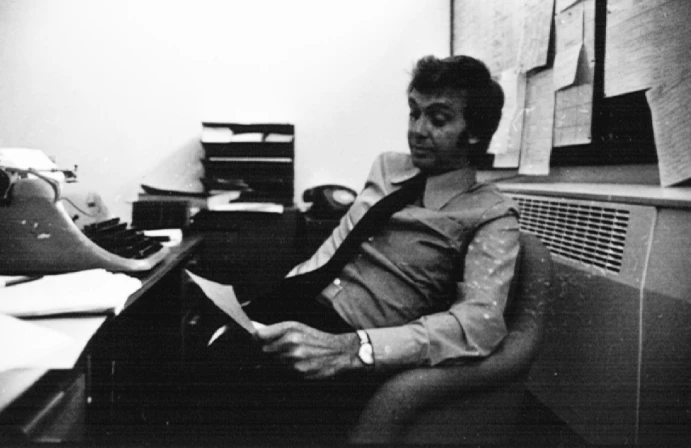
The Grundy Organisation was not concentrating solely on adult drama. Roger Mirams, who ran the company’s Children’s Drama Department, was also achieving considerable success. Roger had a fascinating working method.
He would come up with six programming ideas at once. Then he would sit down with Reg and, in what must have been quite a marathon session, run through every idea to get his feedback.
One of the projects Reg helped develop was a science-fiction children’s feature film called The Captives. Roger hoped to produce the film in 1979. Unfortunately, the project ran into a financial obstacle. The Grundy Organisation needed to raise an additional A$100,000 to get the production underway.
A backer could not be found in time. The Captives never made it into production. It was an unfortunate disappointment, but the Grundy children’s department continued to develop new ideas and programmes.
More than twenty-one hours of television every week
By the end of the 1970s, the scale of the Grundy Organisation was extraordinary. The company was producing more than twenty-one hours of programming every week.
Its output now covered:
- Serialised drama
- Game shows
- Children’s drama
- Telemovies
The organisation had become the third-largest independent production house in the world, surpassed only by two American organisations. And this was only the beginning.
Reg Watson had returned to Australia intending to help build a television drama operation. Instead, he and his colleagues were developing a production powerhouse whose formats would travel around the globe.
The Young Doctors had proved that Australian-made daily drama could become a massive domestic hit.
The Restless Years showed that a format developed for Australian audiences could be adapted internationally.
And the Grundy Organisation had developed the production machinery to keep the hits coming.
There would be plenty more of them.
With thanks to Reg Watson/Darren Gray, Alan Coleman Collection, ATV Network archive and The National Film and Sound Archive of Australia.
One Reply to “Reg Watson: Heads to hospital for a Nine Network success”
Comments are closed.