
It was 100 years ago today since writer, producer and director Reg Watson was born. We continue our special series of features as we celebrate one of television’s greats…

After nineteen years in Britain and more than 2,000 instalments of Crossroads, Reg Watson had no intention of returning to Australia. Then Reg Grundy came calling… Reg Watson still had no plans to return to the country of his birth.
He was happily settled in Britain, had a hit television series on his hands and had spent almost two decades building an extraordinary career in British television. But another Reg had other ideas.
Reg Grundy, already a hugely successful producer of radio and television game shows in Australia, had become fascinated by the popularity of Crossroads.
Australian television had already attempted a version of Crossroads in the late 60s with ‘Motel‘ but it failed to attract the same success as its UK originator.
But that didn’t bother Reg Grundy, who had become a television powerhouse in the entertainment and game show genres. Now, he wanted to produce television drama in Australia.
And he wanted Reg Watson to build it for him.
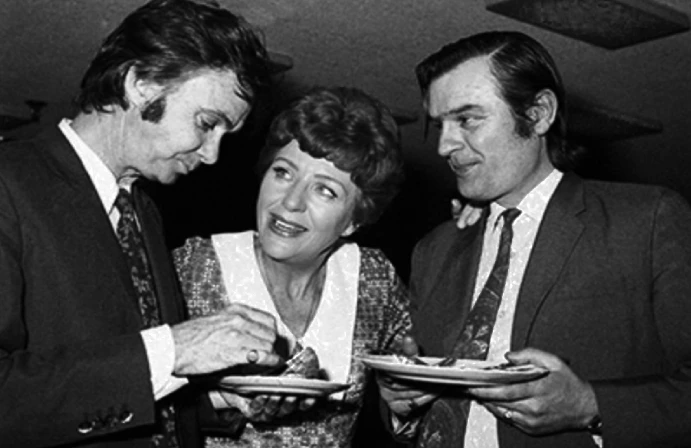
Reg Grundy wasn’t easily discouraged
Reg Grundy had initially visited ATV in 1971 to see how Crossroads was put together in an attempt to take the format back to Australia to develop fast-turnaround serials. But Reg realised he needed Reg Watson, that was the key to the success.
For three years, Reg Grundy tried to persuade Watson to return home and become his Head of Drama.
Three years.
Three offers.
Three refusals.
Reg’s reasoning was perfectly understandable. He was happily settled in England, working on a hugely successful programme and enjoying one of the most productive periods of his career.
But Reg Grundy was a persistent man. Eventually, fate gave him another opportunity.
When Watson took a holiday back to Australia to visit his family, he was persuaded to make a detour to Sydney and take a look at what the Grundy Organisation was doing.
The visit reminded him of something he had almost forgotten. Sydney was beautiful. The climate was wonderful. The sun was shining.
And perhaps, after nineteen years away, Australia wasn’t such a bad place to come home to after all.
This time, Reg Watson said yes. In 1974, he accepted the position of Head of Drama with the Grundy Organisation.
As he prepared to leave ATV, Sir Lew Grade paid tribute to him, telling the Australian Associated Press that Reg was:
“A brilliant and successful producer.”
It was a remarkable endorsement from the man who had given Watson so many opportunities in British television. Now Reg was heading home.
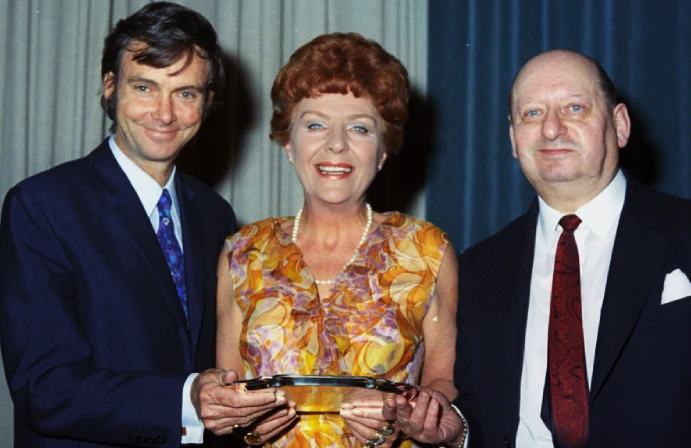
One serial on every Australian network
As Head of Drama, Watson’s task was ambitious. He would be responsible for developing new daily serials.
Once a production was commissioned, Reg would retain overall control as executive producer, but hand the day-to-day running of each series to its own producer.
The aim was simple — at least in theory.
Reg Grundy wanted the organisation to have at least one daily serial screening on every Australian television network at any given time.
It was an exciting prospect. But there was no guarantee it would work. Reg knew that. He even had a contingency plan.
If the whole experiment failed, he decided he would spend six months driving around Australia before settling down to do some serious writing.
The British television veterans who followed Reg
Watson knew that if he was going to achieve Grundy’s ambition, he needed the right people around him.
One of the first recruits was Alan Coleman, who had directed Crossroads and had subsequently been producing his own programmes for ATV as Head of Childrens Drama.
Reg Grundy eventually persuaded him to make the journey to Australia and join the Grundy Organisation.
Then there were the Buckleys. When Reg first arrived in England, he had initially boarded with Australian-born Rene Buckley, who worked in the Wardrobe Department at ATV’s Elstree Studios in London.
Rene was in constant demand from the stars appearing on ATV productions. One of her favourite stars was the legendary Zsa Zsa Gabor.
When Rene’s time with ATV came to an end, it was fittingly Zsa Zsa who made a speech about her departure and presented her with a beautifully wrapped present. Rene knew that if Zsa Zsa was giving her something, it was bound to be something fantastic.
She opened it. It was a Hilton towel. Not quite the glamorous parting gift she had been expecting. But Rene was heading home regardless.
She was accompanied by her daughter Robey, also a wardrobe mistress, and her son Rusty, who had worked as a floor/stage manager at Granada Television in Manchester.
All three would join the Grundy Organisation, bringing their British television experience back to Australia.
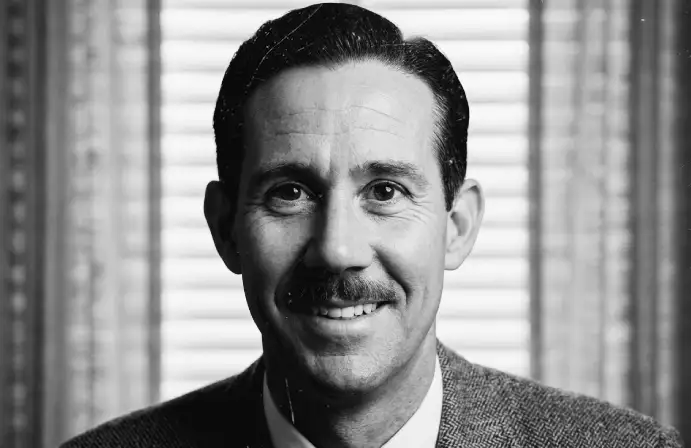
A step backwards before the great leap forward
There was one obvious difference between the television industries in Britain and Australia. Australian television was still broadcasting in black and white.
For Reg and his British colleagues, returning home therefore initially felt like taking a step backwards. But they had already experienced the transition to colour in Britain and knew that Australian television would soon face the same technological revolution.
Colour broadcasting would arrive in Australia in 1975. For now, though, Reg had programmes to make.
The teenage soap opera that challenged the censors
When Reg Watson arrived in Australia, Reg Grundy had just begun production on his first television soap opera for the Seven Network.
The programme was Class of ’74.
The concept had been devised by John Edwards, but Watson had helped develop the initial idea and had even worked on forthcoming scripts while still employed on Crossroads in Britain.
It was the first Australian daily serial aimed directly at a teenage audience. Reg’s first task was to bring the production operation into shape.
He needed to organise a more workable rehearsal and production schedule so that cast and crew could efficiently produce five episodes every week.
The story revolved around the students and staff of Waratah High School. Headmaster Charles Ogilvy was played by Leonard Teale, while the series explored contemporary issues including teenage sex and relationships.
Nothing explicit was shown. That didn’t stop the Broadcasting Control Board from deciding that the programme was unsuitable for early evening viewing.
The censors demanded scenes be cut and re-shot. Eventually, the programme had to move to a later timeslot. Despite the controversy, it proved extremely popular. It opened with a rating of 37 — a record for the 7pm slot.
The audience had spoken. But the battle with the censors was far from over.
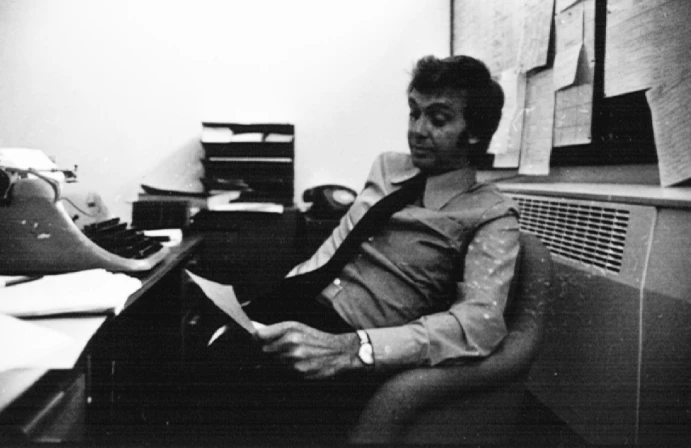
When censorship changed the programme
A second series, Class of ’75, was commissioned the following year. But the censors had already made up their minds.
They regarded the programme as a “dirty show.” Their increasingly stringent demands eventually stripped the serial of much of what had made it distinctive.
Greater emphasis was placed on comedy and lighter storylines. That created a problem. The original audience had come to expect something edgier.
Now the programme was changing beneath them. Eventually, a new framework was agreed with the Broadcasting Control Board which would have given the writers greater scope.
But by then it was too late. Channel Seven in Melbourne had already moved the programme out of prime time.
The show did not return in 1976.
For Reg, it was an early lesson in just how difficult it could be to produce daily drama when the creative ambitions of the production team collided with the restrictions of the television authorities.
Bringing daily drama to Queensland
While Class of ’74 was being produced in Sydney, another Reg Watson creation was taking shape in Queensland.
BTQ7 in Brisbane commissioned Until Tomorrow, which ran from 1975 to 1976. It had a particular significance for Reg.
This was to be the first daily serial produced in Queensland — the state where he had been born.
The series was designed for a daytime audience and followed the lives and loves of two central families. The cast included Babette Stephens, Hazel Phillips and Barry Otto.
But producing original Australian daytime drama came with a significant financial problem. Imported American daytime serials were considerably cheaper to screen.
The cost of producing the show eventually proved too high, and the series did not last long. For Reg, however, it was another important step in developing an Australian-made daily drama industry.
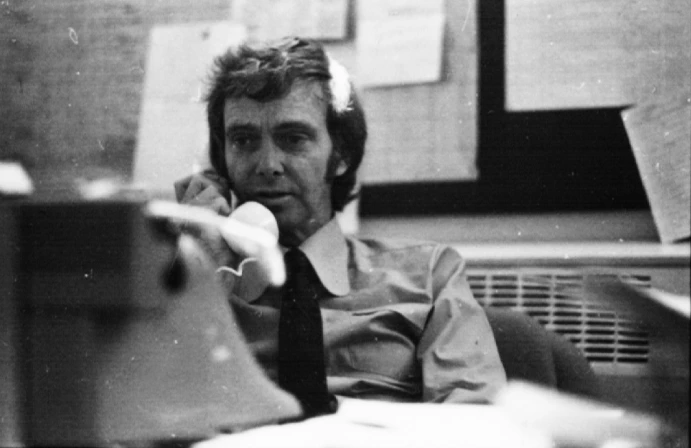
Not every great idea made it to air
Down in Sydney, Reg was developing concepts for new drama productions. The networks were interested. Several pilots were produced at considerable expense.
Not all of them made it to the screen.
Two pilots created for the Nine Network demonstrated just how varied Reg’s ideas could be.
The first was The Martins and McCoys, starring Jimmy Hannan and Annie Brisk. The premise centred on a widower and a widow who lived next door to one another.
Both were raising young children. Both had plenty in common. And, inevitably, romance was just around the corner. The second could hardly have been more different.
Two Way Mirror revolved around the raunchy goings-on at a cosmetic and fashion house.
The cast included Babette Stephens and Stanley Walsh.
Both pilots showed considerable promise. Sadly, neither would be given the opportunity to develop into a full series. The viewing public never got to see what Reg might have done with them.
But Reg was learning. He was assembling a team. He was developing formats.
And, most importantly, he was establishing a production system that would soon have a much bigger impact on Australian television.
The man who had helped create Crossroads was now back in his homeland. And the biggest productions of his Australian career were still to come.
With thanks to Reg Watson/Darren Gray, ATV Network Archive, Fremantle and The National Film and Sound Archive of Australia.
2 Replies to “Reg Watson: Coming home to build an Australian television empire”
Comments are closed.